

“Can you make me something strong?” my friend asked, sitting down in my kitchen after a long week.
“Strong like espresso, or strong like more caffeine?” I asked back.
He looked at me like it was a trick question. Fair enough. Most of us use “strong” for both, and that mix-up is the key to understanding the difference between espresso and filter coffee.
So we ran a quick test. Same beans, two cups. Here’s what we tasted, backed by real numbers, so you can see the difference between espresso and filter coffee in flavor, body, bitterness, acidity, strength, and caffeine.
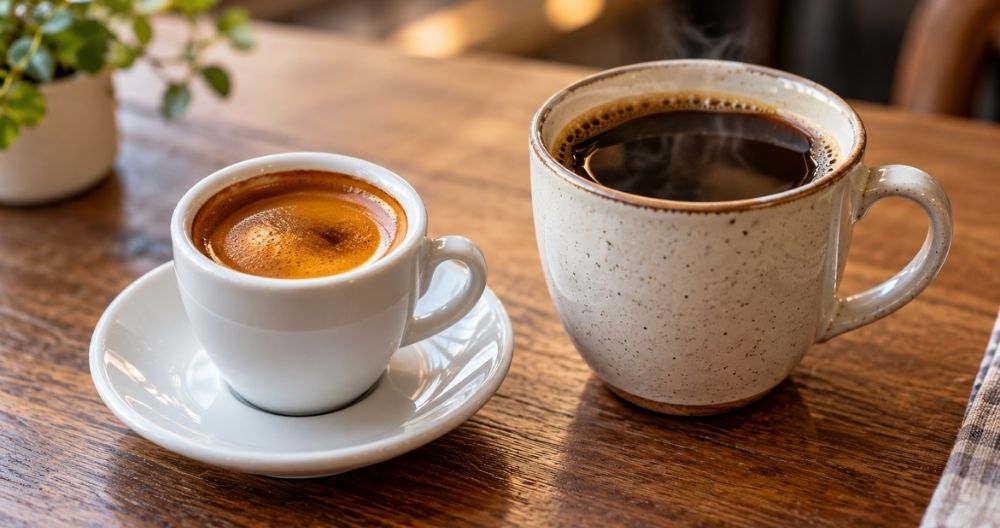
Table of Contents
Short on time? Here’s the quick version.
Espresso is coffee brewed fast, under pressure, with very little water. Filter coffee, on the other hand, is brewed slowly, by gravity, and uses much more water.
That one change creates almost every other difference between espresso and filter coffee.
Espresso tastes more intense because it’s far more concentrated. Filter coffee tastes cleaner and brighter, with more room for delicate notes. Espresso feels thick. Filter coffee feels light. And here’s the twist: a single espresso usually has less total caffeine than a regular cup of filter coffee.
Here’s the difference between espresso and filter coffee at a glance:
| Espresso | Filter Coffee | |
|---|---|---|
| How it’s brewed | Pressure, about 9 bar | Gravity |
| Time | About 25–30 seconds | About 3–5 minutes |
| Serving | About 30 ml | About 200–300 ml |
| Concentration | About 8–12% dissolved coffee | About 1.15–1.35% dissolved coffee |
| Caffeine | About 63 mg per single shot | About 96 mg per 240 ml cup |
| Taste | Bold, dense, chocolatey | Clean, bright, aromatic |
Now let’s slow down and look at why.
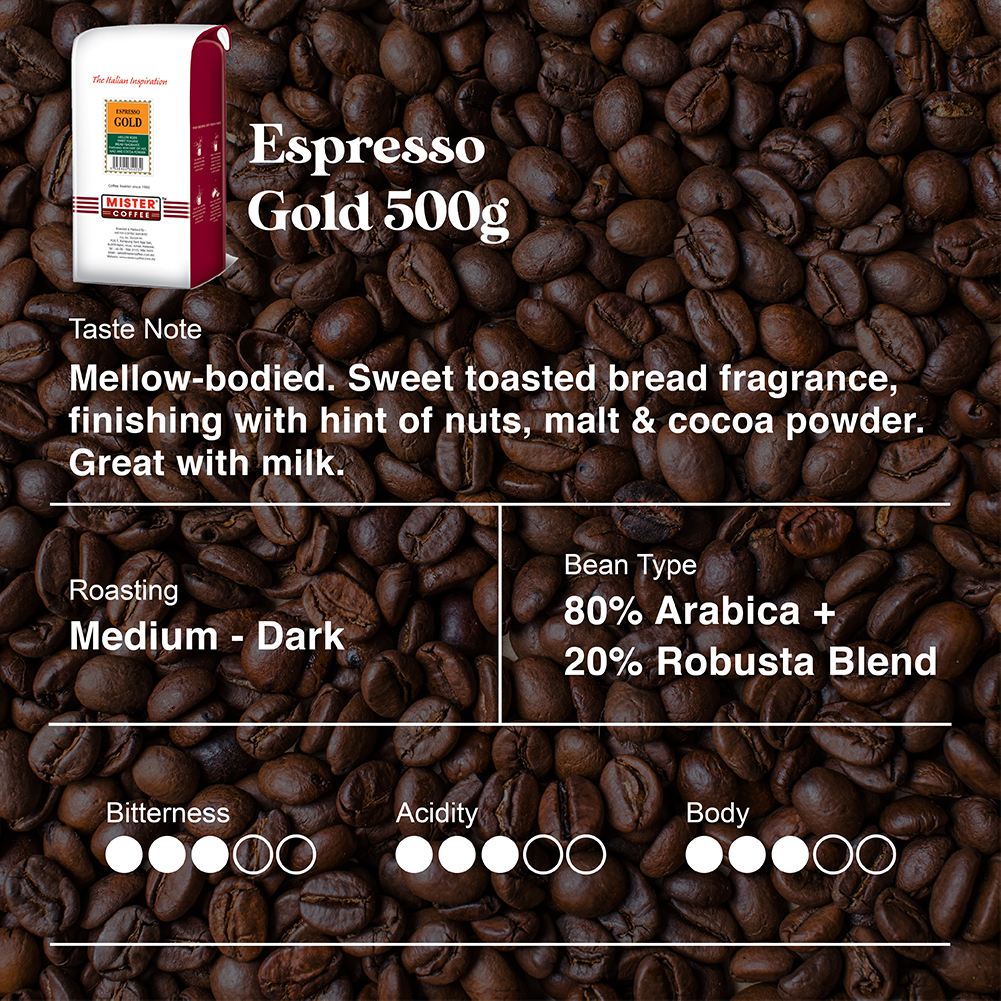
For our experiment, I opened a bag of Espresso Gold. It’s one of our medium-dark blends, 80% Arabica and 20% Robusta, with notes of toasted bread, nuts, malt, and cocoa.
Cup A was an espresso. About 18 grams of finely ground coffee in, about 36 grams of espresso out, in roughly 28 seconds.
Cup B was a pour-over. About 15 grams of medium-ground coffee and 250 ml of hot water, brewed in around three and a half minutes.
My friend tried the espresso first. He closed his eyes. “Okay. That’s dark chocolate with a punch.”
Then he tried the pour-over. “Wait. This is the same coffee?”
It was. But the filter cup tasted softer and rounder. The nutty, toasted notes were still there. They were just spread out, easier to sip slowly.
Same beans. Same grinder. Entirely different experience. That’s the difference between espresso and filter coffee in action. The brewing method alone changed everything.
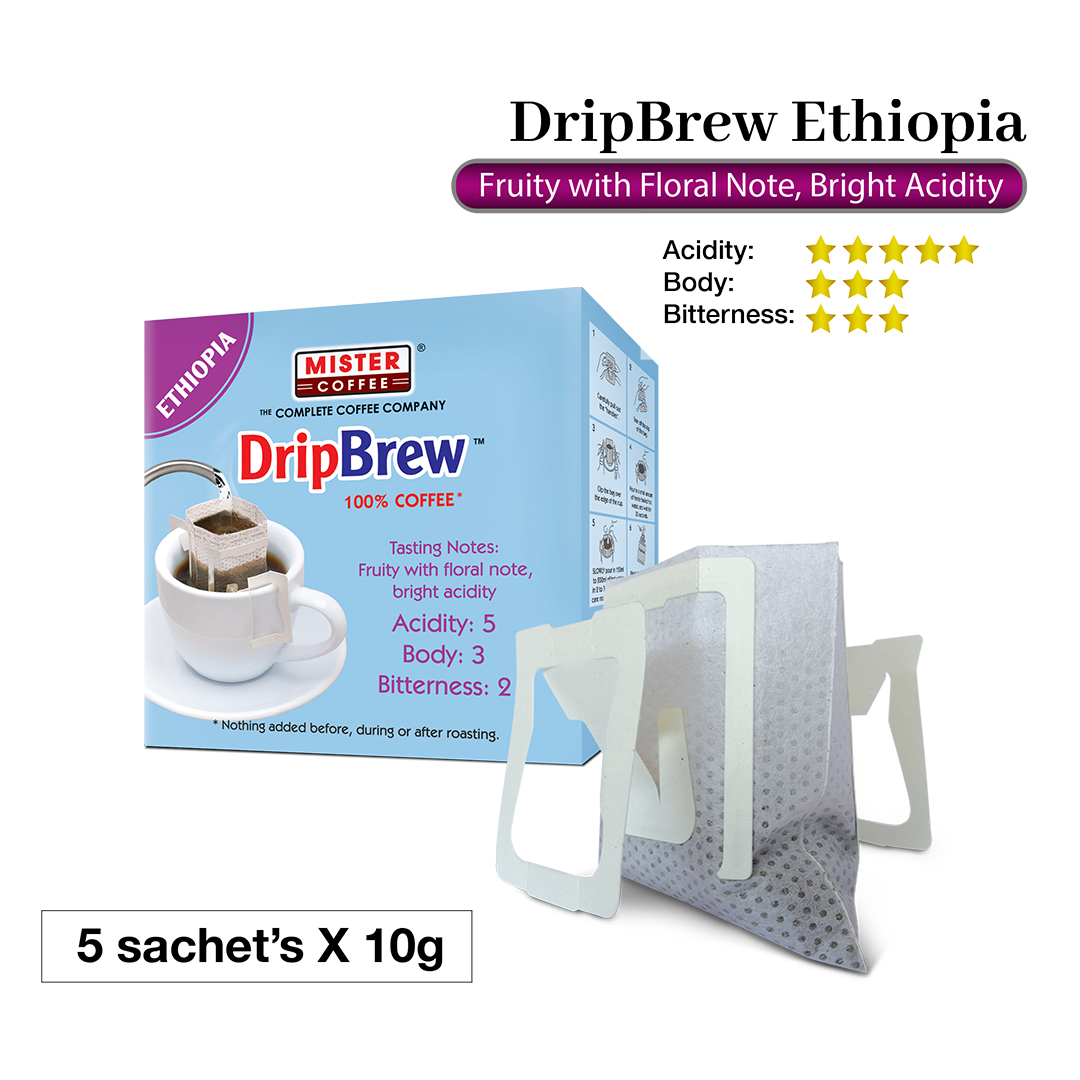
Later, we added a third cup, a DripBrew Ethiopia drip bag. That’s where things got fruity. I’ll come back to it in the flavor section.
Every difference between espresso and filter coffee starts inside the brewer.
Some people say “espresso vs. coffee” as if espresso were a totally different drink. It isn’t. Espresso is coffee, just pushed to its most concentrated form.
Espresso and filter coffee are simply two of many coffee brewing methods. If you’d like to see the whole family, our guide to types of coffee brewing techniques covers them all.
The most important thing to know about espresso coffee is pressure.
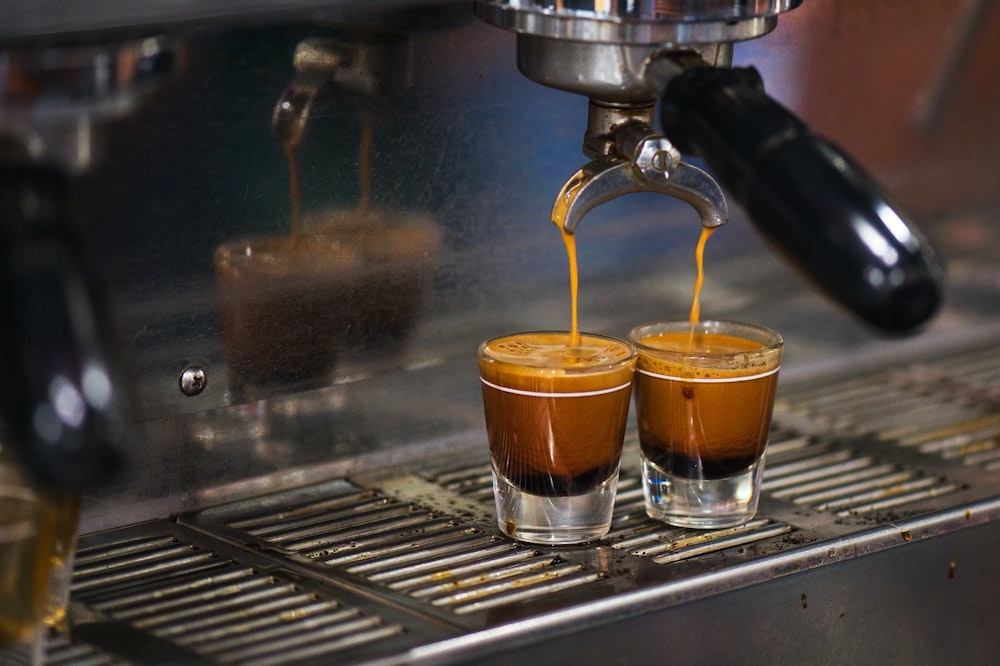
An espresso machine forces hot water through a tightly packed bed of fine coffee at around 9 bar. That’s about nine times the air pressure at sea level.
A shot takes about 25 to 30 seconds. A single shot is around 30 ml. The usual ratio is about 1:2, meaning one part coffee to two parts liquid.
That pressure also creates crema, the golden foam on top. It’s made of carbon dioxide bubbles and emulsified coffee oils. Fresh beans give a thicker crema, which is one reason freshness matters so much. Our guide to freshly roasted coffee beans explains why.
For a deeper look, read our article on understanding espresso.
Filter coffee is a slow process.
Hot water, usually around 90 to 96°C, is poured over medium-ground coffee. It trickles through the ground and a paper, cloth, or metal filter, then drips into your cup. Pour-over, drip machines, and drip bags all belong to this family. In many countries, espresso vs. drip coffee is really the same comparison.
A brew usually takes 3 to 5 minutes. The Specialty Coffee Association’s classic “golden ratio” is about 55 grams of coffee per liter of water, roughly 1:18. Many home brewers go a bit stronger, around 1:15 to 1:17.
So here’s the difference between espresso and filter coffee in a single ratio. Espresso is about 1 part coffee to 2 parts liquid. For filter coffee, the ratio is about 1 part coffee to 15 to 18 parts water.
Want to try a filter at home? Start with our guide on how to make pour-over coffee.
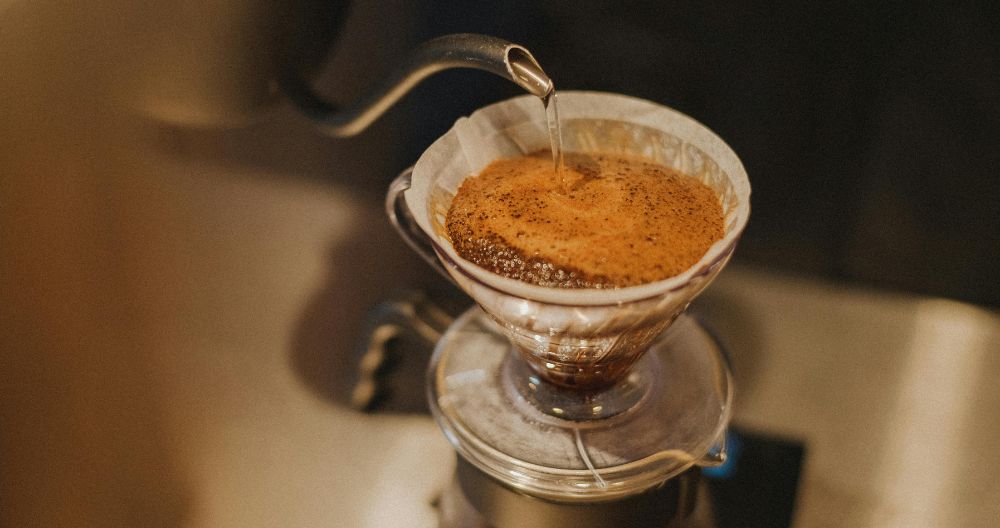
The espresso vs. filter coffee taste gap is the first thing most people notice. And our little test proved it’s huge, even with the same beans.
I like to explain the difference between espresso and filter coffee in flavor with photography.
Espresso is a close-up photo. Everything is big, bold, and right in front of you.
Filter coffee is a wide landscape shot. You see more detail, more space, and more layers.
A good espresso flavor profile is dense and concentrated. Common notes include:
Because so much flavor is packed into a small volume, everything hits your tongue at once. That’s the “punch” my friend described.
The flavor profile of filter coffee is lighter and more transparent. Depending on the beans, you might notice:
This is where our third cup came in. The DripBrew Ethiopia is fruity and floral, with bright acidity. My friend took one sip and said, “This blend tastes like tea with fruit in it.”
He wasn’t wrong. Those notes were in the beans all along. The gentle brew simply let those notes come through.
Want to decode tasting notes like these? Our guide to coffee flavor notes makes it simple. And if that fruity cup sounds like you, read about Yirgacheffe coffee flavors.
Honestly, both do. That’s the beauty of the difference between espresso and filter coffee. They just bring out different things.
Espresso brings out more intensity. Chocolate gets deeper. Sweetness gets syrupy. The body gets heavy.
Filter coffee brings out more clarity. Fruit, flowers, and subtle acidity become easier to pick out.
If you want to understand what a bean really tastes like, filter coffee usually tells you more. If you want that flavor turned up to maximum, espresso is your tool.
Body is how heavy a coffee feels in your mouth. Think of the difference between water and full-cream milk.
When it comes to espresso body vs. filter coffee body, espresso wins by a mile. It feels thick, silky and sometimes almost syrupy. Filter coffee feels lighter and cleaner.
For many people, this is the difference between espresso and filter coffee they notice even before flavor.
There are two main reasons.
Concentration. Espresso simply has far more dissolved coffee in every sip. We’ll get to the numbers shortly.
Oils and fine particles. Espresso has no paper filter. So more of the coffee’s natural oils and tiny particles end up in your cup, adding weight and crema.
Paper filters work the other way. Together with the spent grounds, they hold back most of those oils. A 2017 study in Food Research International tracked cafestol, a natural oil compound in coffee, through paper-filter brewing. Only about 0.15% of it ended up in the brewed coffee. The rest stayed behind in the grounds and the paper.
That’s why filter coffee looks clearer and feels lighter on the tongue.
This part of the difference between espresso and filter coffee also explains why espresso is the base for milk drinks. A light filter coffee gets lost in milk. A thick, concentrated shot cuts right through it. If you love lattes at home, our guides on how to steam milk consistently for espresso and the difference between cappuccino and latte will help.
Usually, yes. But the reasons are more interesting than “espresso is just bitter.”
Bitterness and acidity are where the difference between espresso and filter coffee gets misunderstood the most. So let’s take them one at a time.
A few things push espresso bitterness up:
I learned that last one the hard way. When I bought my first home espresso machine, I used a bag of pre-ground coffee that had been open for weeks. The shots came out harsh and hollow. I blamed the machine for a month.
The machine was fine. The coffee was stale, and my grind was all wrong. Fresh beans, a proper grinder, and a shot time of around 25 to 30 seconds fixed almost everything. Our guide on how to make a good cup of espresso covers these basics.
Filter coffee often tastes brighter. That’s filter coffee acidity, and in coffee it’s a compliment. It means liveliness, like the fresh tang of an orange or a green apple.
Filter coffee is often made with lighter roasts. Lighter roasts keep more of the bean’s natural acids, including chlorogenic acids, which break down as roasting goes darker. The clean cup then lets that brightness shine.
Espresso has acidity too. But at espresso’s concentration, a very light roast can taste sharp or sour instead of bright. That’s one reason most espresso blends lean darker.
So in the difference between espresso and filter coffee, acidity is less about how much acid is present. It’s more about how clearly you can taste it.
Curious how roast level changes all this? Here’s our comparison of medium vs dark roast coffee.
Now back to my friend’s question. Is espresso stronger than filter coffee?
The honest answer is yes and no. It depends on what “strong” means to you.
When people talk about espresso vs filter coffee strength, they usually mean one of two things. Strength of taste, which is concentration. Or strength of kick, which is caffeine.
Let’s start with taste.
Coffee professionals measure concentration as TDS, or total dissolved solids. It’s the percentage of your drink that is actual coffee rather than water.
According to the SCA’s Golden Cup standard, well-brewed filter coffee sits at about 1.15% to 1.35% TDS. Espresso typically lands around 8% to 12% TDS.
That means espresso concentration is roughly seven to ten times higher than filter coffee. That’s the biggest difference between espresso and filter coffee in taste, and it’s why a small sip of espresso feels so big.
Here’s something most people don’t know. Both methods aim to extract a similar share of the coffee itself, about 18% to 22% of the ground coffee’s weight. Espresso just dissolves that into far less water.
This is also why strong coffee vs. espresso isn’t the same thing. You can brew a stronger filter coffee, or a thick “kopi kaw,” by adding more grounds. It will taste heavier than normal filter coffee. But it still won’t come close to espresso’s concentration.
So for taste, the difference between espresso and filter coffee is clear: espresso wins. For caffeine, keep reading.
This is the part of the difference between espresso and filter coffee that surprises people most.
According to Mayo Clinic’s caffeine chart, a 1 oz (about 30 ml) espresso contains around 63 mg of caffeine. An 8 oz (about 240 ml) cup of brewed coffee contains around 96 mg.
Here’s the simple math:
So espresso caffeine vs. filter coffee comes down to this. Per ml, espresso has about five times more caffeine. Per serving, filter coffee usually has more, simply because the cup is much bigger.
Even a double espresso, at around 126 mg, can fall below a large mug of filter coffee. A 350 ml mug at 0.4 mg per ml works out to roughly 140 mg.
Remember, filter coffee caffeine content varies a lot. Bean type, roast, grind, and ratio all change the number. A Robusta-rich coffee brewed strongly can carry noticeably more.
I’ve felt the difference between espresso and filter coffee myself. A single espresso at three in the afternoon barely affects my sleep. A big mug of filter coffee at the same time? I’m staring at the ceiling at midnight.
A quick safety note. The U.S. FDA says up to 400 mg of caffeine a day is generally not linked to negative effects in healthy adults. If you’re sensitive to caffeine, pregnant, or taking medication, check with your doctor. And if you want the flavor without the buzz, read what decaf coffee is.
For more detail, our full guide to caffeine in coffee goes deeper.
Once you understand the difference between espresso and filter coffee, picking beans becomes much easier.
Good espresso coffee beans need body, sweetness, and balance. They should taste great on their own and with milk.
Our Espresso Series is roasted medium-dark with exactly that in mind. Besides the Espresso Gold from my test, a few others worth knowing:
Not sure whether you want more Arabica or Robusta? Our guide to Arabica vs Robusta coffee beans will help you decide.
For filter coffee, I lean toward single origins. They show their personality best in a clean cup.
Browse our Beans & Grounds range for whole beans and ground coffee. If you prefer zero equipment, our DripBrew™ drip bags cover a lovely spread of origins:
Can you use espresso blends for filter coffee? Yes. Our espresso blends also work well in drip brewers and French presses if you enjoy strong, rich coffee. You’ll get a bolder, chocolatey cup rather than a bright, fruity one, just like Cup B in my test.
Shopping tip: whichever you choose, check the roast date. Our guide on how to identify high-quality roasted coffee beans shows what to look for.
Your equipment is where the difference between espresso and filter coffee gets practical. It decides which drink you can make on a busy Tuesday morning. So let’s be practical.
A pump espresso machine gives you the pressure espresso needs. Pair it with a good grinder, and you’re ready for shots, lattes, and cappuccinos. Our guide to home espresso equipment lists what you actually need.
Prefer less fuss? Try one of these:
Filter coffee needs very little. A dripper, a paper filter, and a kettle will do. So will a basic drip machine.
The easiest option of all is a drip bag. Hang it on your cup, bloom the coffee with a little hot water for about 20 seconds, then pour 150 to 200 ml in two or three rounds. Our DripBrew brewing guide walks you through it.
Plenty of coffee lovers end up with an espresso and filter coffee machine setup side by side. Espresso for the morning latte. Filter for a slow afternoon cup.
Owning both is also the best way to explore the difference between espresso and filter coffee with your own favorite beans.
For most beginners still learning the difference between espresso and filter coffee, I recommend starting with filter coffee.
Here’s why. My younger cousin bought a shiny espresso machine as her very first coffee gadget. Within two weeks, she messaged me in frustration. Shots too fast. Shots too slow. Milk everywhere.
I suggested she pause the machine and try drip bags for a month. No pressure, no tamping, no stress. Just hot water and a cup.
A month later, she knew exactly what she liked: chocolatey and nutty, not fruity. When she went back to the espresso machine, she chose her beans with confidence. Her shots improved fast.
Filter coffee is cheaper to start and more forgiving, and it teaches your palate what beans really taste like. That makes the difference between espresso and filter coffee much easier to appreciate later.
Choose espresso if you:
Choose filter coffee if you:
In the end, filter coffee vs. espresso isn’t a competition. It’s more like choosing between a short song and a full album. Both are good. It depends on your mood.
If you run a café, the difference between espresso and filter coffee shapes your whole menu.
Your espresso blend powers lattes, cappuccinos, and iced drinks. Filter or batch brew serves customers who want a bigger, lighter black coffee at a good price. Because of the difference between espresso and filter coffee, each needs its own roast profile and a steady, consistent supply.
That’s where a reliable coffee bean supplier matters. Since 1982, we’ve helped cafés, restaurants, and offices choose beans for both styles. Our guide to choosing the right coffee supplier for your coffee shop is a good place to start. Planning a quick-service menu? See our list of grab-and-go café menu items.
Building your own coffee brand? Our OEM and private label service can develop espresso blends, drip bags, and more under your own label.
So, what is the difference between espresso and filter coffee in flavor and strength?
Espresso is concentrated, bold, and full-bodied. It tastes stronger in every sip because it holds about seven to ten times more dissolved coffee.
Filtered coffee is clean, bright, and aromatic. It tastes lighter, yet a full cup usually carries more total caffeine.
The difference between espresso and filter coffee isn’t about which one is better. They’re two ways of telling the same bean’s story.
As for my friend? He finished the espresso in two sips and declared it “the strong one.” Then he slowly drank the whole mug of pour-over while we talked.
Late that night, he texted me: “Why am I still awake?”
I replied with one word: “Caffeine.” It was the big filter cup, not the espresso. He’d just learned the difference between espresso and filter coffee the hard way.
My advice? Run your own side-by-side test at home. Same beans, two methods. It’s the fastest, tastiest way to understand the difference between espresso and filter coffee.
You can find Mister Coffee Beans, DripBrew, and more online or at selected supermarkets. Check our store locator for your nearest outlet.
Happy brewing.
The brewing method. Espresso uses about 9 bars of pressure, fine grounds, and very little water for 25 to 30 seconds. Filter coffee uses gravity, medium grounds, and much more water for 3 to 5 minutes.
In taste, yes. In caffeine, not always. A double espresso has around 126 mg of caffeine, while a large 350 ml mug of filter coffee can have about 140 mg.
No. Crema is a visible difference between espresso and filter coffee. It needs pressure to form, so it’s unique to espresso and espresso-style drinks.
Sour shots usually run too fast or use very light roasts. Bitter shots usually run too long or use stale coffee. Aim for about 25 to 30 seconds with fresh beans.
Yes. The difference between espresso and filter coffee comes mostly from grind, ratio, and brewing method. Espresso blends make a bold filter cup, while light single origins can taste sharp as espresso.
Filter coffee is usually easier and cheaper to start with, and it helps you learn the difference between espresso and filter coffee step by step. Drip bags like DripBrew need only hot water and a cup.


If you're looking for decent supermarket coffee in Malaysia, here's the quick answer. You can buy Mister Coffee beans and...
My first attempt at home espresso was, honestly, a disaster. I bought a cheap machine online, used pre-ground supermarket coffee,...
"Where can I actually find good coffee beans at Giant?" I get some version of this question constantly, usually from...
I keep a small shelf at home just for coffees I'd hand to someone who says, "I don't really taste...
I once watched a new kiosk owner near a KL office tower change her entire menu three times in her...
Walk past any LRT station, office tower, or campus entrance in the Klang Valley these days, and you'll spot at...

