

I still remember a regular at our café counter holding up two cups, sniffing each one, and asking me, half-joking, “Okay, but which one is the real coffee?” Both cups had espresso in them. Both had milk. And yet she swore they tasted like twoentirelyy different drinks.
That’s the thing about cappuccino and latte. They’re built from almost the same two ingredients, espresso and milk, but the way those ingredients are measured and layered changes everything about how a drink looks, tastes, and even how many calories end up in your cup.
I’ve spent years pulling shots, steaming milk, and explaining this exact question to curious customers and home baristas. So let’s settle it properly. By the end of this guide, you’ll know exactly what separates these two espresso classics, how to order with confidence, and how to make either one at home.
Table of Contents
Let’s start with the drink that usually gets ordered first thing in the morning. So, what is cappuccino coffee, exactly?
The classic cappuccino is built on a simple, elegant ratio: one part espresso, one part steamed milk, and one part milk foam. That’s it. Three layers, roughly equal in volume, stacked in a small cup.
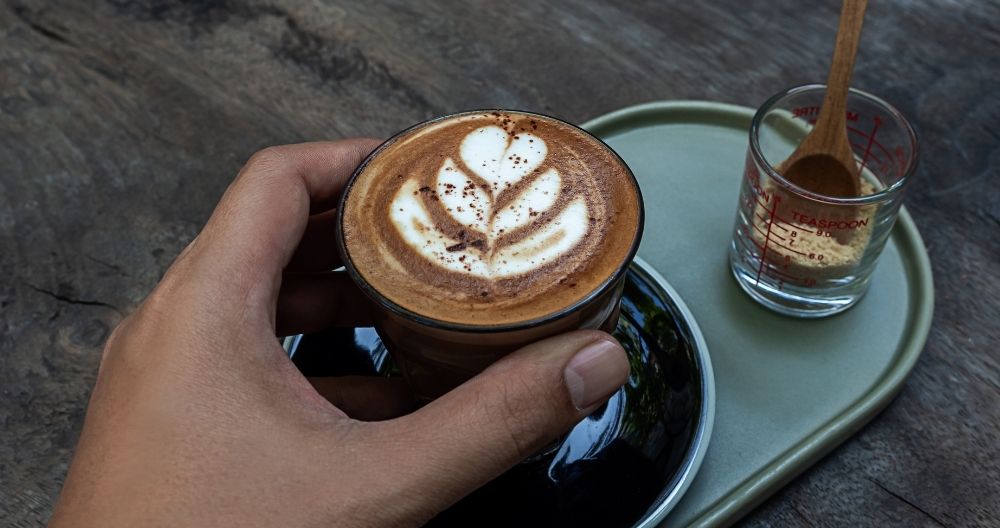
The name itself has a surprisingly rich backstory. It comes from the Capuchin friars, a Catholic order founded in Italy in the 1520s known for their brown hooded robes. The color of espresso mixed with milk reminded people of that robe, and the name stuck, first as “Kapuziner” in 17th-century Vienna, then evolving into the Italian “cappuccino” once espresso machines arrived. The drink as we know it today really shaped Italy in the early 1900s, after Luigi Bezzera patented an early espresso machine in 1901, and cappuccino had become a staple of Italian café culture by the 1930s.
Traditionally, cappuccino coffee is served small, around 150 to 180 ml (5 to 6 oz), because that thick foam cap, usually 15 to 20 mm deep, needs a shallow cup to hold its shape. The foam isn’t just decoration. It changes the way the drink hits your palate, giving you a light, airy first sip before the stronger espresso underneath comes through.
I always tell people the cappuccino is the drink for someone who wants to actually taste the coffee. The milk softens the espresso’s edge without drowning it out.
Now for the other side of the counter. Latte coffee takes the same starting point, a shot of espresso, and heads in a gentler, creamier direction.
A latte typically uses one part espresso to about two or three parts steamed milk, finished with just a thin layer of foam, usually only 3 to 5 mm thick. That small foam cap is precisely what makes latte art possible; there’s just enough microfoam to pour a heart or a rosette on top.
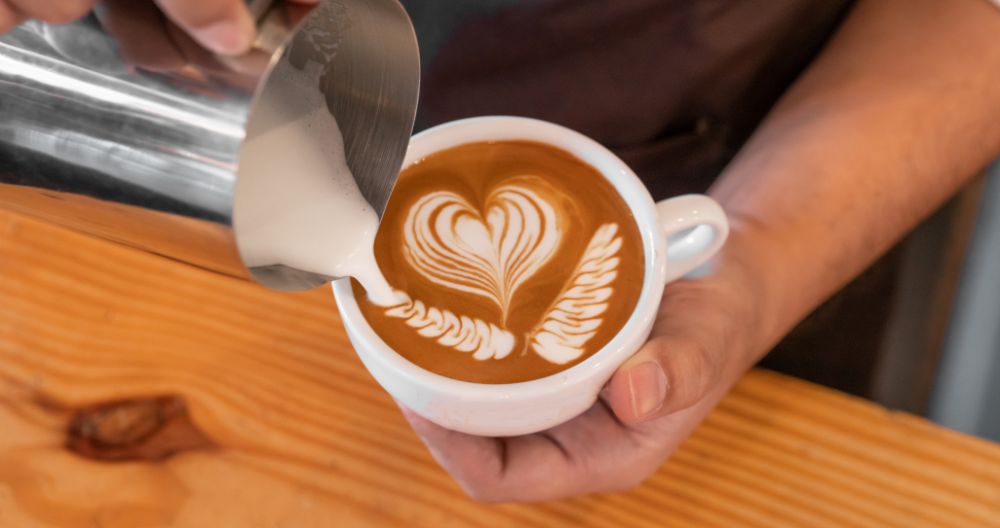
The word “latte” is simply Italian for milk, and the term “caffè latte” was first recorded in English all the way back in 1867, in an essay by American writer William Dean Howells describing his breakfast in Italy. But the latte most of us know today, in a tall glass or a big ceramic mug, has an unmistakable American twist.
As the story goes, a barista named Lino Meiorin, running Caffe Mediterraneum in Berkeley during the 1950s, started adding extra steamed milk to his cappuccinos because customers found them too small and too intense. That stretched-out, milkier version caught on, and decades later, Seattle’s coffee scene (and the rise of Starbucks in the 1980s and 90s) turned it into the global standard we order today.
Because of all that extra milk, a latte is served in a bigger cup, usually 240 to 360 ml (8 to 12 oz), sometimes even larger. It’s rounder, softer, and more forgiving on the palate, which is exactly why it’s such a popular entry point for people who are still getting used to the taste of espresso.
Here’s the difference between latte and cappuccino, focusing on what really matters when you’re ordering or brewing at home.
| Feature | Cappuccino | Latte |
|---|---|---|
| Espresso-to-milk ratio | Roughly 1:1:1 (espresso, steamed milk, foam) | Roughly 1:3 (espresso to steamed milk) |
| Foam thickness | Thick, about 15–20mm | Thin, about 3–5mm |
| Typical serving size | 150–180 ml (5–6oz) | 240–360 ml (8–12oz) |
| Calories (12oz, whole milk) | Roughly 120–130 kcal | Roughly 190–210 kcal |
| Texture | Light, airy, distinct layers | Smooth, creamy, well-blended |
| Flavor intensity | Bolder, espresso-forward | Milder, milk-forward |
| Best for | Coffee lovers who want to taste the espresso | Anyone who prefers a softer, creamier cup |
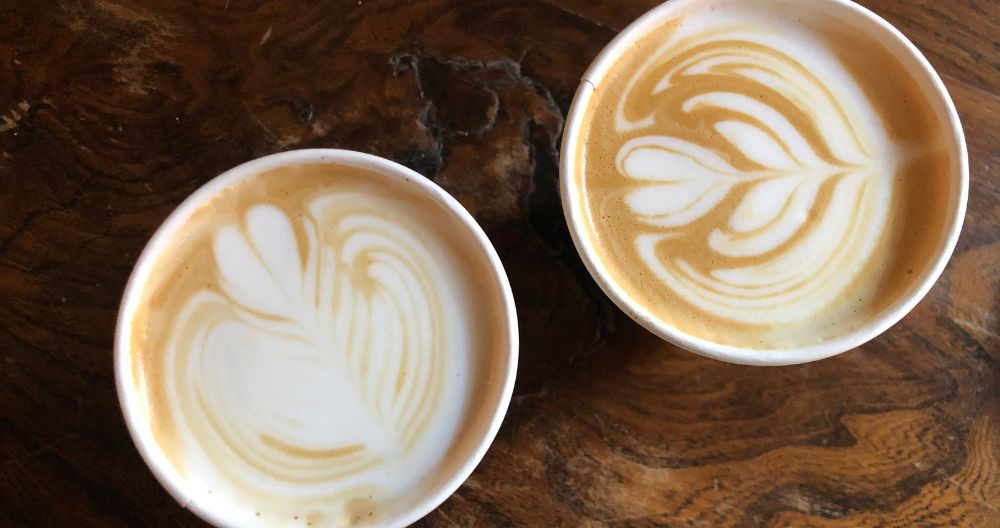
When I walk people through the latte and cappuccino differences in person, I usually hand them both side by side and ask them to just look first before tasting. You can actually see the difference before you taste it. The cappuccino has that thick, cloud-like foam sitting proud above the rim. The latte is smoother and more uniform, sometimes with a bit of latte art floating on top.
Taste-wise, the cappuccino hits you with espresso first, then softens. The latte is creamy from the very first sip, with the espresso sitting quietly underneath, adding warmth and depth rather than taking center stage.
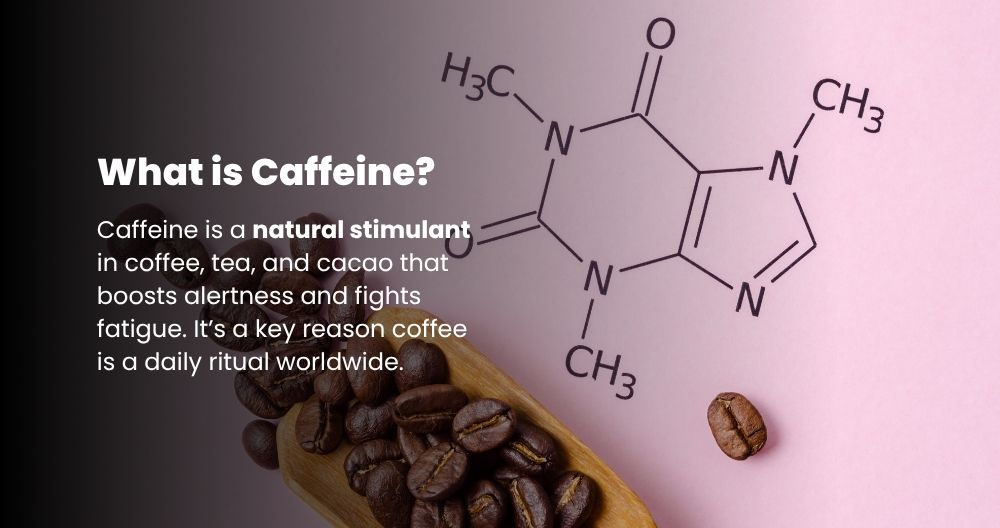
Here’s something that surprises many people: cappuccino and latte usually contain the exact same amount of caffeine, assuming they’re made with the same number of espresso shots.
The extra milk in a latte doesn’t dilute the caffeine; it dilutes the taste. A single shot of espresso holds roughly 63 mg of caffeine, and a double shot around 125–150 mg, regardless of whether that shot ends up under a thick cappuccino foam cap or swimming in a big glass of steamed milk.
For context, most health guidelines suggest up to about 400mg of caffeine a day is fine for most healthy adults, which works out to roughly three to four regular-strength coffee drinks. If you’re sensitive to caffeine, going for a single shot in either drink, rather than a double, is a better lever to pull than choosing between latte and cappuccino.
Learn more: Caffeine in Coffee: Everything You Need to Know for Your Perfect Cup
I get asked this question constantly, especially by people who’ve just started their home coffee routine: Can you drink coffee lattes every single day without any issues?
For most healthy adults, yes, one or two lattes a day fits comfortably within normal caffeine and calorie guidelines. The bigger thing to watch isn’t the coffee itself; it’s the milk and any added sugar. A daily 12oz whole milk latte adds roughly 190–210 calories, which is worth knowing if you’re tracking your intake closely.
Personally, I switch between dairy and oat milk depending on the day. Oat milk froths beautifully and has become one of my favorite options for a lighter latte that still feels indulgent. If you’re watching calories more strictly, a cappuccino with less milk or a latte made with skim or unsweetened almond milk are both easy swaps that keep the coffee experience intact.
You genuinely don’t need a café-grade setup to make a good latte. Here’s the basic coffee latte recipe I walk beginners through.
What you need:
Steps:
If you’re working with actual coffee beans at home rather than pre-ground coffee, a bean labeled specifically for espresso will give you a rounder, less acidic shot that holds up beautifully under milk. That’s exactly why Mister Coffee’s Espresso Series beans, like Espresso Classic or Espresso Gold, are blended and roasted specifically with milk-based drinks in mind.
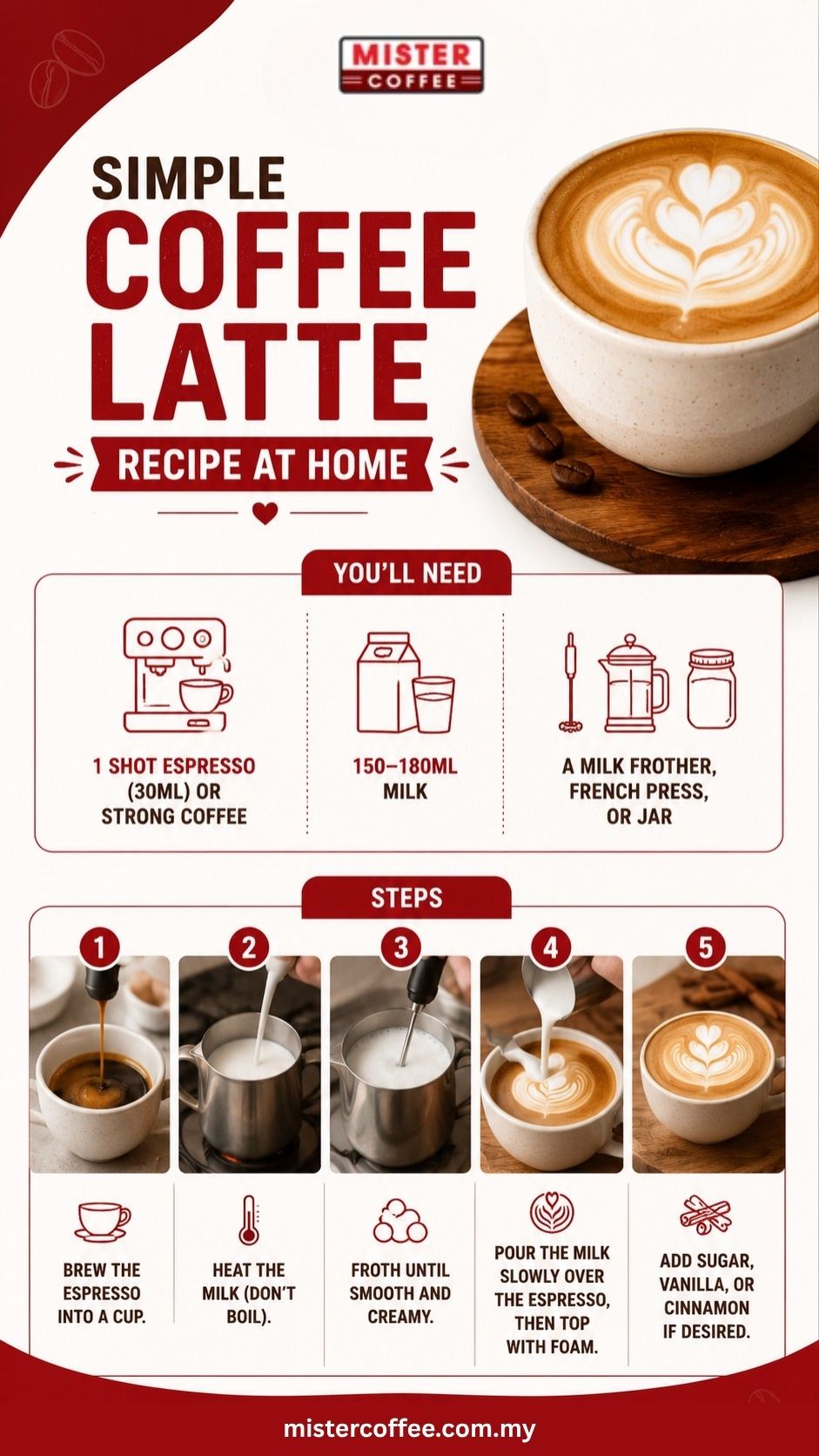
The cappuccino version of this process is almost identical, just with less milk and more air. Use the same single shot of espresso, but only about 90–100ml of milk. Froth it harder and longer than you would for a latte since you’re aiming for that thick, structured foam rather than smooth microfoam.
Pour the steamed milk in first, then spoon the thicker foam on top so it holds its shape rather than sinking in. Served in a smaller cup, the cappuccino gives you that classic three-layer look, with a satisfying, almost whipped texture on top.
If you’ve ever typed “coffee bean matcha latte” into a search bar, wondering whether matcha lattes are actually made from coffee beans, here’s your answer: they’re not.
A matcha latte borrows the format of a latte, steamed milk plus a concentrated base, but swaps the espresso for whisked matcha, which is finely ground Japanese green tea. It’s technically not a coffee drink at all, even though it lives on the same menu and uses the same milk-frothing technique. If you enjoy the creamy, milk-forward texture of a latte but want to skip caffeine from coffee specifically, matcha (or a chai latte, which uses spiced tea instead) is worth trying; just know you’re stepping outside the coffee bean family entirely when you do.
If the experience has you wanting to build your own latte or cappuccino habit at home, here’s where I’d point you in our range.
For home baristas with an espresso machine or pod system: our Espresso Series beans, from Espresso Classic to Espresso Royal and Super Bar, are roasted specifically to hold their character under steamed milk. If you use capsules instead, our EseBrew hardpod espresso range and Nespresso-compatible N-Cap capsules cover the same flavor profiles without needing a grinder.
For a quick milk coffee with zero equipment: our True-Brew Latte series, including Caffe Latte, Kopi Latte, and Teh Latte, uses real brewed coffee or tea with sugar and non-dairy creamer in individually packed filter bags. It’s genuinely closer to a real brewed latte than a typical instant 3-in-1 sachet, which makes it a great option on busy mornings.

For setting up a proper home or small café station: we carry Carimali espresso machines, Macap grinders, and milk fridges built to keep steamed milk consistent, shot after shot.
At the end of the day, choosing between cappuccino and latte isn’t about one being a “better” coffee than the other. It’s about how much milk you want between you and that shot of espresso and how you like your morning to feel: bold and layered or smooth and creamy.
Next time you’re standing at a counter, or your own kitchen, deciding, remember the simple version of the latte and cappuccino Differences: a cappuccino is one-third espresso, one-third milk, and one-third foam, while a latte trades most of that foam for extra steamed milk. Same beans, same machine, but entirely different personality in the cup. My honest advice? Try both, side by side, at least once. You’ll know which one is “yours” the moment you taste it.
A cappuccino is roughly one-third espresso, one-third steamed milk, and one-third thick foam, while a latte uses much more steamed milk and just a thin layer of foam on top.
Cappuccino coffee is an Italian espresso drink made of equal parts espresso, steamed milk, and milk foam, traditionally served in a small 150–180ml cup.
No. Both usually have the same caffeine since they’re based on the same espresso shots — the latte just tastes milder because of the extra milk.
Yes, for most healthy adults one to two lattes a day fits normal caffeine guidelines. Just keep an eye on the milk and sugar calories if you’re drinking it daily.
No. A matcha latte follows the same milk-and-foam format as a coffee latte, but it’s made with whisked green tea powder instead of espresso.


My sister has exactly one coffee ritual: rip open a sachet, pour hot water, stir, done. No grinder, no scale,...
I still remember the first time someone handed me a cup of coffee and said, "you'll get notes of blueberry...
If you're anything like me, a proper brew is an essential part of your morning routine. Over the years, I’ve...
For a drink that has utterly transformed the way we enjoy our daily caffeine hit, it’s cold brew. There is...
There is nothing quite like waking up to the rich, inviting aroma of freshly roasted coffee filling your home. For...
Picture this, you’ve just started your day, bright and early, and the first thing on your mind is a warm...