

Have you ever stood in front of a coffee shelf, staring at bags of beans, wondering what the difference actually is between a medium roast and a dark roast? You aren’t alone.
Whether you’re looking for a bright, fruity pick-me-up or a bold, smoky kick to start your morning, the roast level is the most important factor in how your coffee tastes.
In this guide, we will break down everything you need to know about medium vs dark roast coffee so you can shop with confidence.
Key Takeaways
Table of Contents
Roasting is the transformative process that turns green, spongy coffee seeds into the aromatic, crunchy beans we use to brew our favorite drink.
The roasting process involves heating the beans to high temperatures, triggering chemical reactions like the Maillard reaction and caramelization. As the heat rises, the beans change color, lose moisture, and develop oils. The longer they stay in the roaster, the “darker” they become.
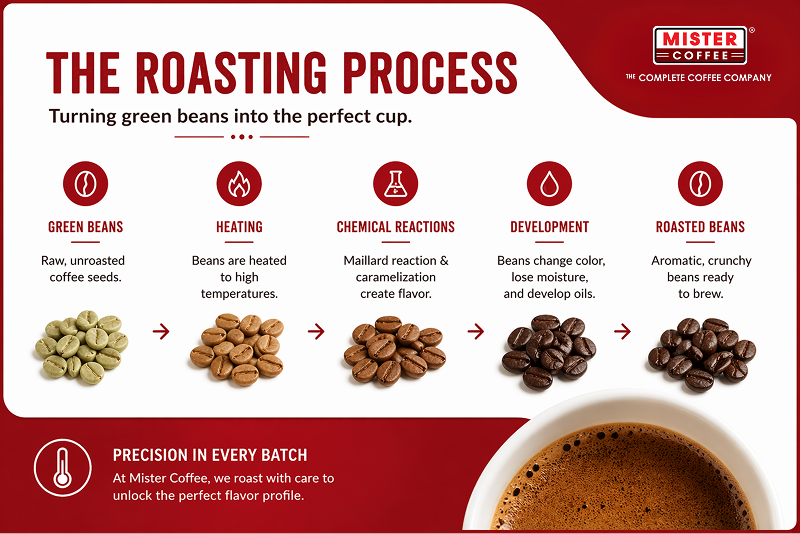
At Mister Coffee, we treat this process as an art form, ensuring every batch hits the precise temperature to unlock the perfect flavor profile.
Medium roast coffee is a balanced brew that sits right in the middle of the roasting spectrum, offering a harmonious blend of flavor, aroma, and acidity.
Often referred to as the “American Roast,” medium roast coffee is usually roasted until just before or during the “second crack.” The beans are a rich brown color and lack the oily sheen found on darker roasts.
This level of roasting is beloved by specialty coffee enthusiasts because it preserves the arabica medium roast coffee characteristics, meaning you can actually taste the region where the coffee was grown (like the citrus of Ethiopia or the nuttiness of Colombia).
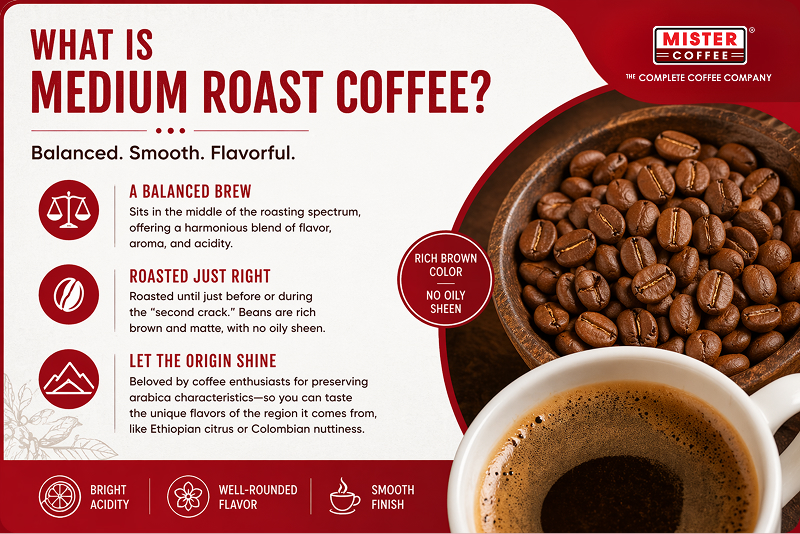
Why you’ll love medium roast coffee beans:
If you want to try a world-class example, our Jamaica Blue Mountain Clydesdale Medium Roast offers an incredibly refined and smooth experience that defines what a premium medium roast should be.
Dark roast coffee is characterized by its bold, heavy body and deep, smoky flavors that come from an extended roasting time.
So, what is dark roast coffee exactly? These beans stay in the roaster longer, often reaching temperatures above 225°C. By this point, the natural sugars in the bean have caramelized and the cellular structure has broken down, pushing natural oils to the surface. This results in a shiny, black bean. The primary flavor comes from the roasting process itself rather than the bean’s origin.
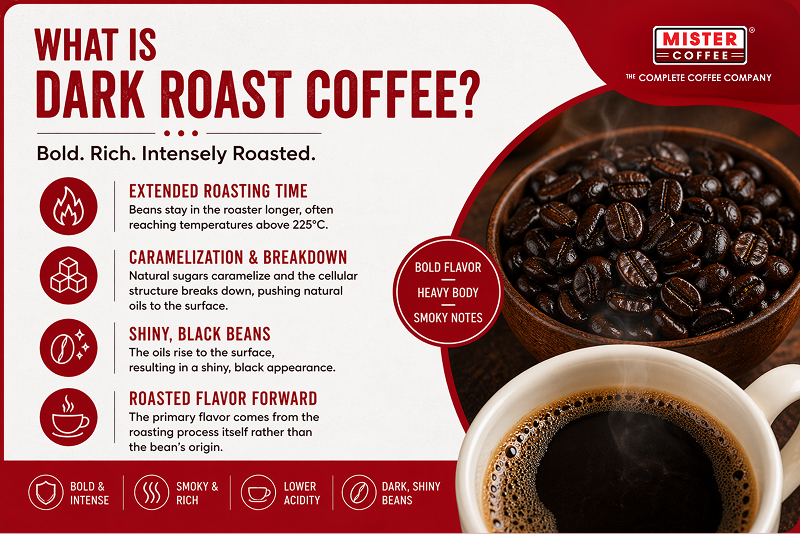
The profile of dark roast coffee:
For those who love a classic, intense coffee, our Espresso Super Bar Dark Roast is a fan favorite for creating rich lattes and cappuccinos.
Choosing between the two comes down to your personal palate. Here is a quick breakdown to help you decide.
| Feature | Medium Roast | Dark Roast |
| Color | Medium brown | Dark brown to black |
| Surface | Dry | Oily/Shiny |
| Flavor | Balanced, sweet, acidic | Bold, smoky, bitter |
| Body | Medium/Velvety | Heavy/Syrupy |
| Acidity | Bright and noticeable | Low and muted |
| Best For | Pour-over, Drip, Chemex | Espresso, French Press, Milk drinks |
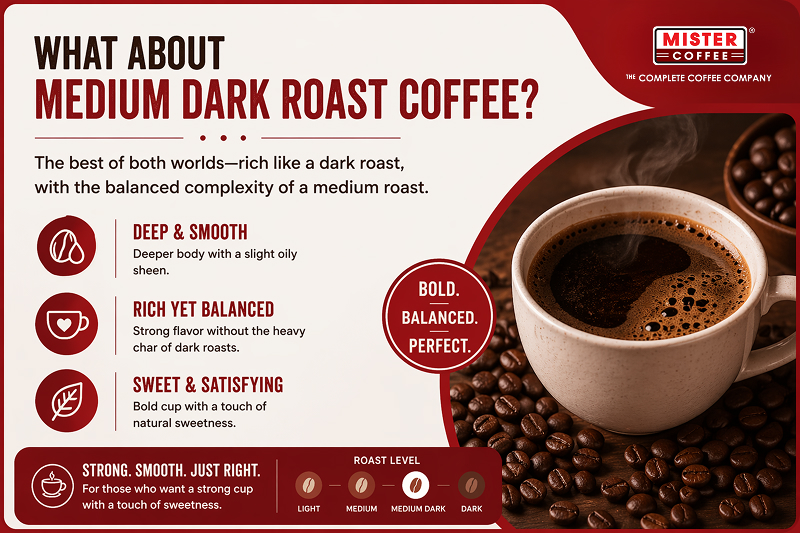
Medium dark roast coffee is the “best of both worlds” option, offering the richness of a dark roast with a hint of the medium roast’s complexity.
If you can’t decide, medium dark roast coffee is an excellent compromise.
These beans will have a slight oily sheen and a deeper body than a standard medium roast, but they won’t have the heavy charred taste of a full Italian or French roast. It’s perfect for those who want a “strong” cup of coffee that still has some sweetness.
Both roast levels offer health benefits, primarily through antioxidants called chlorogenic acids.
Whichever you choose, coffee is a powerhouse of health benefits—as long as you don’t overdo it with the sugar!
The difference in caffeine between medium and dark roast is very small and depends more on how you measure your coffee.
There is a common misconception that dark roast is “stronger” and therefore has more caffeine. The truth is that roasting actually burns off a tiny amount of caffeine. However, dark roast beans are less dense because they lose more water during roasting.
In the end, the difference is so negligible that you should choose based on flavor preference rather than a caffeine hunt!
Dark roast coffee acidity is significantly lower than that of medium or light roasts, making it a preferred choice for people with sensitive stomachs.
Acidity in coffee doesn’t refer to pH levels, but rather a “brightness” or “sparkle” on the tongue. In medium roast coffee beans, this acidity provides a refreshing, fruity quality. In dark roasts, these acidic compounds are broken down by the heat.
If you find that coffee sometimes gives you heartburn or tastes too “sour,” switching to a dark roast like our Bagbrew Italian Style Dark Roast can make a world of difference.
No, the calories in coffee come from what you add to it, not the roast level itself.
Black coffee, whether it’s a medium vs dark roast coffee, contains virtually zero calories (about 2–5 calories per cup). The misconception about dark roast coffee calories usually stems from the fact that dark roasts are often used in sugary lattes or paired with heavy creams to balance the bitterness. If you drink it black, both roasts are equally “diet-friendly.”
While the roast level is vital, the type of bean matters just as much.
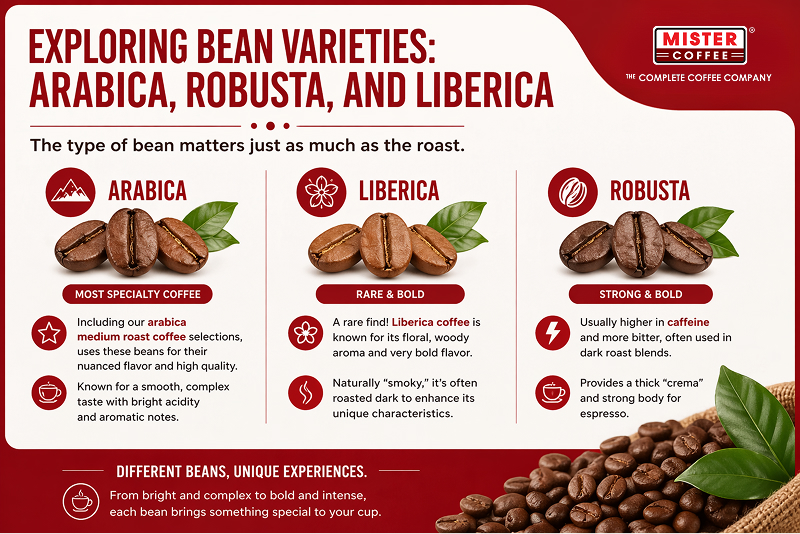
At Mister Coffee, we’ve spent decades perfecting the art of the roast. Here are our top picks for each category:

Not sure where to start? Follow these simple tips:
Since 1982, Mister Coffee has been at the forefront of the coffee industry in Malaysia. Our journey began with a simple passion for the perfect cup, and it has led us to source the finest beans from across the globe. Whether it’s the high-altitude slopes of Jamaica or the rich volcanic soil of Sumatra, we roast each batch with precision and care.
We believe that coffee is more than just a drink; it’s a culture. That’s why we offer everything from whole beans to our innovative Bagbrew series, ensuring that whether you are a professional barista or a busy office worker, you have access to specialty-grade coffee.
You can find our products in major supermarkets or visit our online store to have fresh roasts delivered straight to your door.
In the debate of medium vs dark roast coffee, there is no “wrong” answer. It all comes down to what makes your taste buds happy. If you love a complex, bright, and nuanced cup that tells a story of its origin, a medium roast coffee is your best friend. However, if you crave that classic, bold, and chocolatey richness that pairs perfectly with milk, then dark roast coffee is the way to go.
Ready to find your new favorite? Explore the full range of world-class roasts at Mister Coffee today!
What is a dark roast coffee?
It is coffee roasted for a longer duration at higher temperatures. The beans appear dark brown or black, often have an oily surface, and feature bold, smoky, and caramelized flavors with very low acidity.
What’s the difference between dark roast and normal coffee?
“Normal” coffee usually refers to a medium roast. Compared to it, dark roast is roasted longer, resulting in a heavier body, more bitterness, and less of the original bean’s fruity or floral characteristics.
Why does dark roast coffee taste better?
“Better” is subjective! Many people prefer it because the heavy caramelization creates a comforting, chocolatey, and “strong” flavor that many associate with a traditional cup of coffee or espresso.
Is dark roast the healthiest coffee?
Both are healthy. Dark roast is often easier on the stomach because it produces less acid, while medium roast may contain slightly more antioxidants that are preserved during the shorter roasting time.
What are the disadvantages of dark roast coffee?
The main disadvantage is that the high heat can mask the unique flavor notes of high-quality beans. If you want to taste the specific “terroir” of an expensive bean, dark roasting might hide those nuances.
Is medium roast coffee stronger?
In terms of caffeine by weight, yes, it’s slightly higher. However, in terms of flavor intensity and “bitterness,” dark roast is generally perceived as being the “stronger” cup.
Which is healthier, dark or medium roast coffee?
Both provide significant antioxidants. Medium roast is higher in chlorogenic acid, while dark roast is higher in N-methylpyridinium, which helps protect the stomach lining. Both are excellent choices for a healthy lifestyle.


My sister has exactly one coffee ritual: rip open a sachet, pour hot water, stir, done. No grinder, no scale,...
I still remember a regular at our café counter holding up two cups, sniffing each one, and asking me, half-joking,...
I still remember the first time someone handed me a cup of coffee and said, "you'll get notes of blueberry...
If you're anything like me, a proper brew is an essential part of your morning routine. Over the years, I’ve...
For a drink that has utterly transformed the way we enjoy our daily caffeine hit, it’s cold brew. There is...
There is nothing quite like waking up to the rich, inviting aroma of freshly roasted coffee filling your home. For...