

Caffeine in coffee is the natural stimulant that gives your morning brew its signature boost, helping you feel more alert, focused, and ready to take on the day. Found naturally in coffee beans, it works by stimulating the brain and central nervous system, delaying fatigue and enhancing concentration.
From the rich aroma to the energizing effect, caffeine is one of the main reasons coffee has become a beloved part of daily routines around the world.
Table of Contents
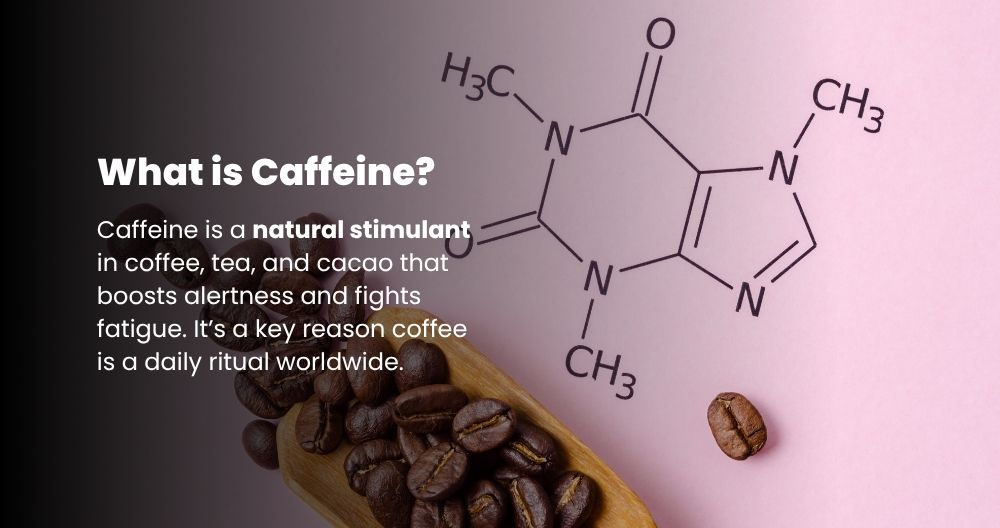
Caffeine is a natural stimulant commonly found in coffee beans, tea leaves, and cacao plants. It’s the key ingredient behind that familiar boost you feel after your morning brew.
By stimulating the brain and central nervous system, caffeine helps increase alertness and delay the onset of fatigue, making it a reliable aid for focus and productivity.
Whether you’re starting your day or pushing through the afternoon, caffeine plays a central role in why coffee is such a valued part of daily routines around the world to kick off the day.
If you think every cup of coffee delivers the same caffeine punch, think again. As someone who experiments with the many varieties of coffee consumption, I can tell you that caffeine in coffee is anything but uniform.
The amount of caffeine in coffee varies widely depending on several factors, coffee bean species, roast profile, grind size, brew method, and serving volume.
A standard 8 oz drip brew might contain anywhere from 70 to 140 mg of caffeine. A single espresso shot, though smaller, can pack a concentrated dose of 60–80 mg.
If you’re drinking Robusta beans instead of Arabica, expect nearly double the caffeine content. The way your coffee is prepared—whether it’s French press, pour-over, cold brew, or espresso—can also change the caffeine level entirely.
So, if you’re chasing that perfect caffeine balance or just curious about what’s really in your cup, it helps to know the variables. Coffee isn’t just a drink—it’s a science, and caffeine in coffee is one part of the equation.
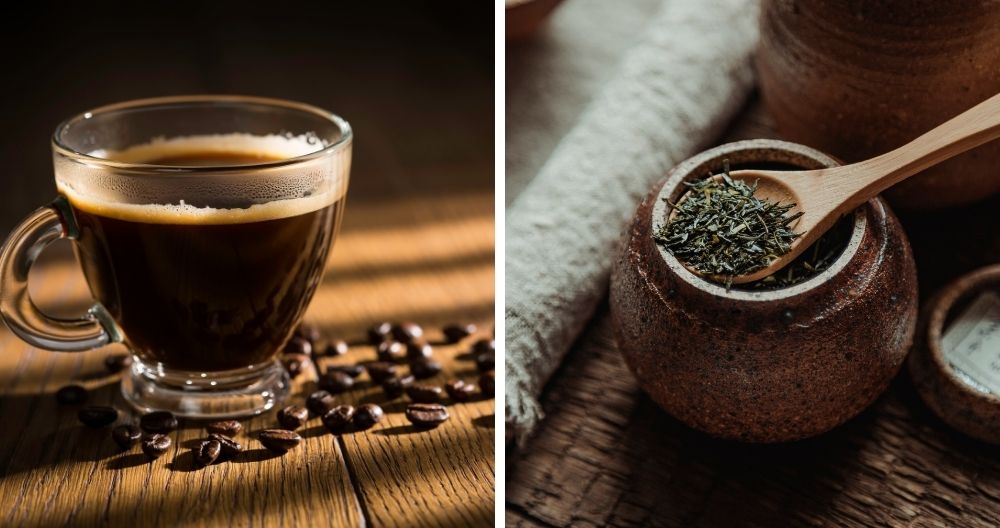
Caffeine may be the common pick-me-up found in both coffee and tea, but the way it’s delivered and experienced can be surprisingly different.
While caffeine in coffee typically packs a stronger punch, averaging around 95 mg per 8 oz cup, some brews can exceed 150 mg of caffeine depending on the bean type, roast, and brewing method.
Tea, on the other hand, offers a more moderate dose. Black tea usually contains 40–70 mg per cup, green tea has about 20–45 mg, and white tea much less. Herbal teas like chamomile or peppermint tea generally have no caffeine at all.
But it’s not just about quantity, it’s about the feeling and the experience. Coffee tends to deliver a fast, intense boost of energy that many people rely on to jumpstart their day.
Tea provides a slower, smoother lift that promotes calm and focus. This creates a more balanced, longer-lasting alertness without the abrupt highs and crashes that some experience with the caffeine in coffee.
So how do we pick between caffeine in tea vs coffee? While both beverages offer caffeine, the effect they have on your body and mind can be quite different. Choosing between them comes down to your personal preference.
If you are looking for a sharp surge of energy, coffee would work. Whereas, if you are looking to have a steady, focused vibe to get through the day, tea might be the option.
| Coffee drinks | Size in oz | Caffeine (mg) |
| Brewed | 8 | 95 |
| Brewed, decaf | 8 | 1 |
| Espresso | 1 | 63 |
| Espresso, decaf | 1 | 1 |
| Instant | 8 | 62 |
| Instant, decaf | 8 | 2 |
Learn more: What is Decaf Coffee?

| Teas | Size in oz | Caffeine (mg) |
| Brewed black | 8 | 48 |
| Brewed black, decaf | 8 | 2 |
| Brewed green | 8 | 29 |
| Ready-to-drink, black bottled | 8 | 26 |
| Sodas | Size in oz | Caffeine (mg) |
| Citrus (most brands) | 8 | 0 |
| Citrus (brands with caffeine) | 8 | 36 |
| Cola | 8 | 33 |
| Root beer (most brands) | 8 | 0 |
| Energy drinks | Size in oz | Caffeine (mg) |
| Energy drink | 8 | 79 |
| Energy shot | 2 | 200 |
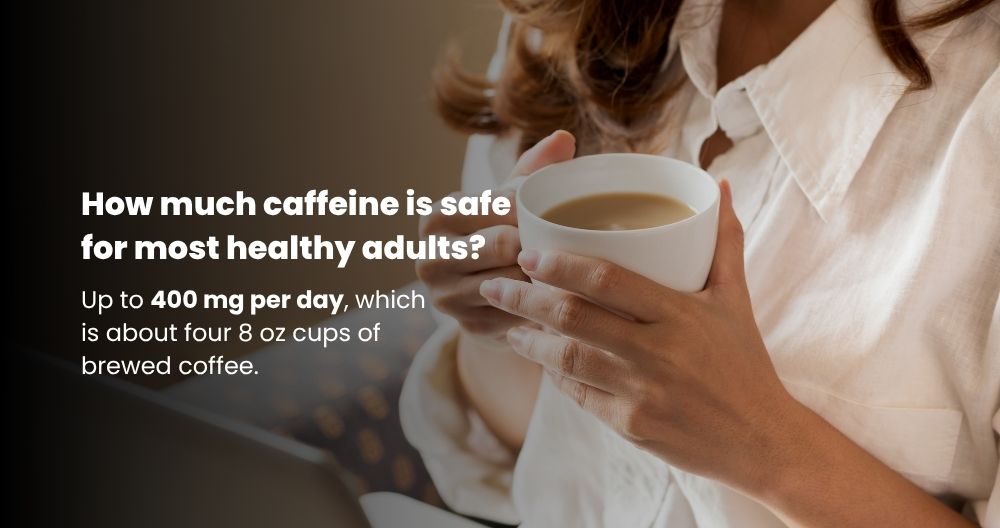
Experts say that up to 400mg of caffeine per day is generally safe for most healthy adults. That’s roughly the amount in four 8 oz cups of brewed coffee.
Coffee can be a great, natural source of caffeine, offering not just energy but also antioxidants and other beneficial compounds. That said, everyone responds to caffeine differently. If you begin noticing headaches, restlessness, or anxiety after your coffee, it might be worth adjusting your intake or switching to a milder brew like decaf.
And for those who are pregnant, breastfeeding, or planning a pregnancy, it’s a good idea to check in with a healthcare provider about how much caffeine is appropriate for your body. Coffee can absolutely be part of a healthy lifestyle, it’s just about finding the balance that works for you.
An average 8 oz cup of brewed coffee contains about 95 mg of caffeine, but the amount can range from 70–140 mg depending on the bean, roast, and brewing method.
Decaf coffee isn’t completely caffeine-free. An 8 oz cup typically has 1–7 mg of caffeine, compared to around 95 mg in regular coffee.
An 8 oz cup of green tea usually has 20–45 mg of caffeine, while the same size cup of coffee averages 95 mg—meaning coffee generally contains about 2–4 times more caffeine.
Yes, in moderation. Caffeinated coffee can boost energy, improve focus, and provide antioxidants. Most healthy adults can safely consume up to 400 mg of caffeine per day. However, excessive intake may cause restlessness, anxiety, or sleep issues.
For those who are pregnant, breastfeeding, or planning a pregnancy, experts recommend limiting caffeine to 200 mg per day or less—about one 12 oz cup of coffee.
Whether you’re after a bold cup of caffeine to kickstart your morning or a smooth decaf to enjoy any time of the day, Mister Coffee has something for every taste. Explore our wide range of premium coffee products and keep your coffee journey going!


Although there are over 100 species of coffee in the world, Arabica and Robusta coffee beans are by far the...
If you are a Muslim person, the answer is yes, you can absolutely drink coffee during Ramadan. There’s nothing in...
Welcome to the great, fragrant world of coffee! If you enjoy drinking coffee, you probably know that it's more than...
Jamaica Blue Mountain coffee is one of the most famous, mysterious, and appealing names in the world of specialty coffee....
Africa is widely regarded as the birthplace of coffee, and its influence on global coffee culture is unparalleled. Countries like...
Coffee is one of the most widely enjoyed drinks in the world, valued not just for its flavor but also...