

For a drink that has utterly transformed the way we enjoy our daily caffeine hit, it’s cold brew. There is something incredibly satisfying about opening your refrigerator, pouring a glass of home-steeped coffee over ice, and enjoying a drink that feels naturally sweet, velvety, and completely devoid of that harsh, tongue-curling bitterness.
But if you have ever tried making it at home and ended up with a batch that tasted flat, sour, or muddy, you are not alone. The secret to a flawless batch does not lie in expensive equipment, it comes down to science and selecting the absolute best coffee beans for cold brew.
Let’s break down exactly what kind of coffee beans are best for cold brew, explore the chemistry of cold extraction, and guide you toward brewing the smoothest cup of your life.
Table of Contents
The exploding popularity of home-brewed cold brew isn’t just a trend; it is a texturized preference. People love it because it offers low acidity cold brew beans performance, an incredibly smooth texture, and a prominent, natural sweetness.
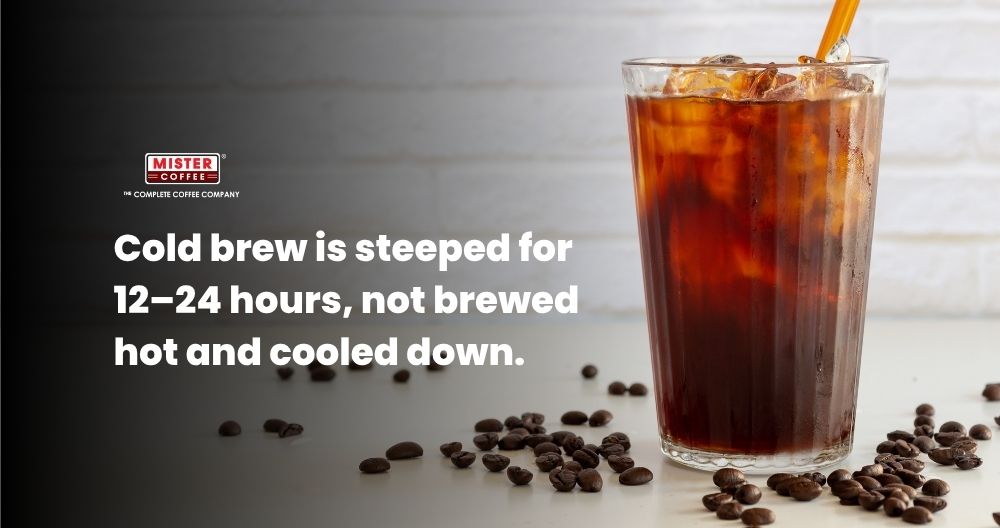
However, we need to understand that cold brew is not just iced coffee. Traditional iced coffee is brewed hot and forced to cool down quickly. Cold brew, on the other hand, relies entirely on time rather than heat, steeping grounds in room-temperature or chilled water for 12 to 24 hours.
Because temperature alters chemical extraction at a molecular level, cold water extracts compounds much more selectively than hot water. To achieve a perfectly balanced, bitter-free cup, you must match this slow immersion process with the correct bean characteristics.
When choosing the best coffee beans for cold brew, your first point of evaluation should always be the roast profile. In the matchup of medium roast vs dark roast cold brew, the winner is comfortably a medium roast to a medium-dark roast.
Why do darker roasts work so beautifully here? Studies in coffee chemistry reveal that as coffee beans are roasted longer, they undergo physical changes—specifically, their structural density decreases, and they become more porous. This increased porosity makes the organic compounds inside the bean highly soluble.
Because cold water is an inefficient solvent compared to boiling water, it needs all the help it can get. A Medium dark roast Arabica dissolves its soluble flavor compounds far more readily into cold water, bringing out gorgeous chocolate nutty coffee tasting notes, molasses, and caramel while completely minimizing sharp bitterness.
Light roasts are celebrated in hot pour-overs for their vibrant, fruity acidity. However, the chemical compounds responsible for those bright notes (like citric and malic acids) require hot water to extract evenly. When subjected to a 16-hour cold bath, light roasts often taste unpleasantly sharp, thin, or strangely “grassy.”
💡 Curious about how roasting completely alters your bean’s chemistry? I recently dove deep into this in our comprehensive guide: Medium vs Dark Roast Coffee: The Ultimate Guide to Finding Your Perfect Cup.
The species of the bean and where it was grown play a massive role in determining whether you will achieve those coveted smooth cold brew coffee beans results.
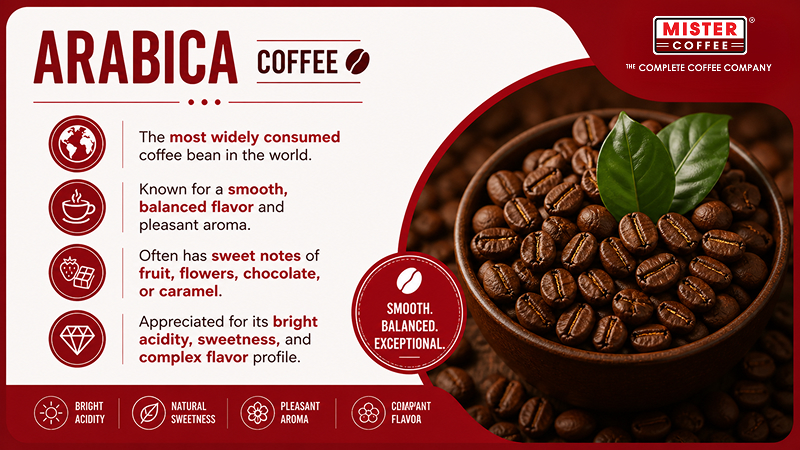
100% Arabica is the gold standard for a silky cold brew. Arabica beans are naturally sweeter and contain more lipids than Robusta. This chemical composition gives Arabica a better flavor complexity and a clean, soft sweetness that shines in a long immersion cycle.
💡 Want to become a bean expert? Check out our breakdown on the Types of Coffee Beans to understand what sets these varieties apart.
To guarantee a naturally low-acid, heavy-bodied profile, look for beans originating from these specific regions:
You could buy the most premium Malaysian coffee bean for cold brew, but if your grind size is incorrect, your beverage will be ruined.
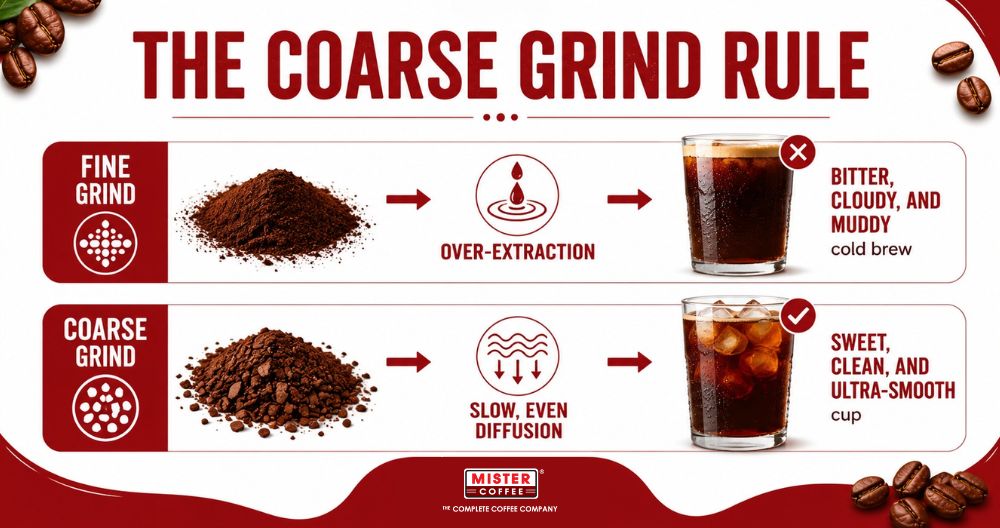
You must use a coarse grind for cold brew—aiming for a texture resembling coarse sea salt or raw breadcrumbs.
If your grind is too fine, the surface area increases exponentially. This causes the cold water to over-extract the bitter alkaloids from the grounds, resulting in a muddy, cloudy, and astringent concentrate. That’s why you need to invest in a good burr grinder, generally ranked the best coffee grinder for cold brew. A good burr grinder will ensure even particle sizes without too much “coffee dust” (fines).
Don’t use water straight from the kitchen tap. Tap water contains chlorine and varying mineral imbalances that can taint the clean, subtle flavors of your brew. Always use filtered or mineral water to get the best taste out of your coffee, just as the roaster intended.
Wondering how much coffee beans for cold brew you need to weigh out? Or exactly how much coffee for cold brew is required for your container?
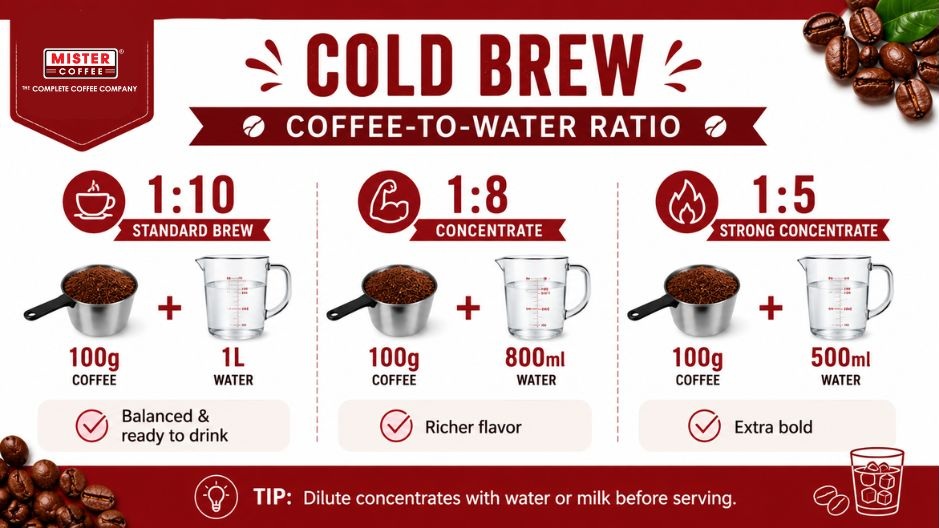
Stick to a reliable cold brew coffee to water ratio. A standard 1:10 ratio (e.g., 100g of coarse coffee grounds to 1 Liter of water) yields a wonderfully balanced, ready-to-drink beverage. If you prefer making a rich concentrate to dilute later with milk or water, tighten your ratio to 1:5 or 1:8.
It is highly discouraged. Pre-ground supermarket coffee is almost always ground finely for drip machines or espresso. Using this in a long-immersion cold brew will cause severe over-extraction, resulting in a bitter, cloudy, and silty drink.
Bitterness is typically caused by two culprits: using a grind size that is too fine, or steeping the coffee for too long (beyond 24 hours). Switch to a strict coarse grind and limit your room-temperature steep time to 12–16 hours.
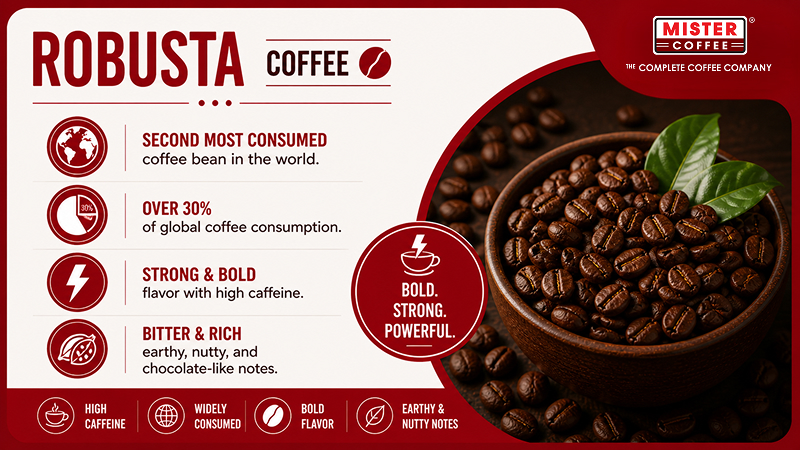
Arabica is highly superior for a smooth cold brew. Robusta does not have the natural sugars or fat content of Arabica and is lower in acidity, frequently resulting in a harsh, rubbery or too smokey flavor when steeped for long periods.
You can, but do so with caution. Light roasts are less soluble in cold water and can quickly taste weak or grassy. If you want a fruity profile, extend your brew time closer to 24 hours and brew at room temperature rather than in the fridge to encourage extraction.
For a smooth, rich concentrate that you can dilute with milk or water later, a ratio of 1:5 (e.g., 200g of coffee to 1 Liter of water) works beautifully. For a smooth, ready-to-drink beverage straight out of the filter, stick to a 1:10 ratio.
If brewing at room temperature (around 20°C to 22°C), stay within the 12 to 16-hour mark. If you are steeping your cold brew inside a refrigerator, the cold temperature slows extraction down, meaning you can safely steep for 18 to 24 hours.
Absolutely. Since cold brew is made of roughly 98% water, impurities or heavy chlorine in tap water will mask the delicate chocolate and nutty notes of your coffee. Always use filtered or bottled mineral water for the cleanest taste profile.


My sister has exactly one coffee ritual: rip open a sachet, pour hot water, stir, done. No grinder, no scale,...
I still remember a regular at our café counter holding up two cups, sniffing each one, and asking me, half-joking,...
I still remember the first time someone handed me a cup of coffee and said, "you'll get notes of blueberry...
If you're anything like me, a proper brew is an essential part of your morning routine. Over the years, I’ve...
There is nothing quite like waking up to the rich, inviting aroma of freshly roasted coffee filling your home. For...
Picture this, you’ve just started your day, bright and early, and the first thing on your mind is a warm...
