

Which coffee brewing method is best? The honest answer is, it depends on you and your lifestyle. Coffee brewing isn’t one-size-fits-all, it’s customizable and that’s exactly what makes it so enjoyable.
Each coffee brewing method brings out different flavors, aromas, and textures, shaped by factors like grind size, water temperature, and brew time. From the clean clarity of a pour-over to the rich body of a French press or the strong intensity of espresso, every technique offers a unique experience.
That’s why we recommend different coffee brewing methods: not to tell you there’s a single “right” way, but to help you discover the one that makes your coffee taste its best. This guide breaks down the most popular coffee brewing techniques so you can choose the brewing method that fits your taste, lifestyle, and brewing style.
Key Takeaway: The brewing method fundamentally changes the coffee experience, and the “best” technique is subjective, urging coffee lovers to experiment to find their personal favorite.
Table of Contents
Pour-over coffee is widely considered one of the best coffee brewing methods for highlighting the subtle flavors and unique characteristics of a specific coffee.

This method uses a cone-shaped dripper and a paper or metal filter. Hot water is poured slowly and deliberately over freshly ground coffee. This allows the coffee to extract evenly as the water flows through the grounds and into a cup or carafe below.
Learn more: How To Make Pour-Over Coffee
The hands-on nature of pour-over brewing gives you full control over key variables. You can easily adjust the grind size, water temperature, pour speed, and overall brew time. This makes it simple to fine-tune your cup to match your exact taste preferences.
Because the water passes through the coffee in a clean, controlled way, pour-over brewing produces a crisp, aromatic cup with excellent clarity and definition.
It is especially well-suited for single-origin coffees, light to medium roasts, and beans with complex flavor notes such as fruit, florals, or citrus.
While it requires more attention than automatic methods, the reward is a refined, expressive cup that truly showcases the coffee’s potential. This makes pour-over a favorite among coffee enthusiasts who enjoy both the process and the exceptional result.
French press coffee is a classic coffee brewing method known for producing a rich, full-bodied cup with a bold flavor.
It’s a full-immersion method, meaning the coffee grounds sit directly in hot water for about four to five minutes, allowing for deep and even extraction.
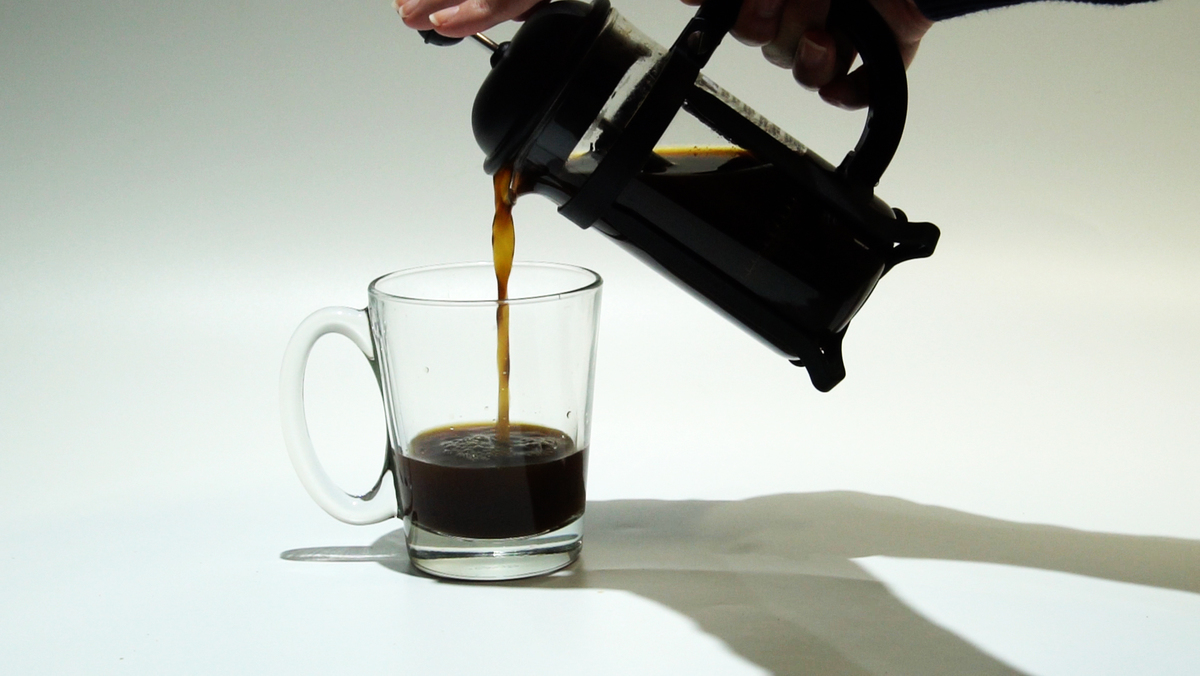
Once the steeping time is complete, a metal mesh filter is slowly plunged through the device. This presses the grounds to the bottom, separating them from the brewed coffee.
Unlike filter-based methods, the French press uses a metal filter that allows natural oils and fine particles to remain in the cup. This results in a heavier mouthfeel and a more intense flavor.
Learn more: How To Use French Press With Ground Coffee
This method works especially well with coarsely ground coffee and is ideal for medium to dark roasts with chocolatey, nutty, or earthy notes.
Simple to use and easy to adjust by changing the steep time or coffee-to-water ratio, the French press is perfect for those who enjoy a bold, textured coffee and a hands-on but straightforward brewing process.
Espresso is a concentrated coffee brewing method created by forcing hot water through finely ground coffee under high pressure. This technique is defined by a short extraction time, typically 25 to 30 seconds.
The result is a small but intensely flavorful shot. It is famously topped with crema, the golden foam that forms from emulsified oils and gases during the high-pressure process.
Brewing espresso successfully requires precise control over several key variables: grind size, pressure, water temperature, and timing. This need for precision makes espresso one of the most technical and demanding ways to brew coffee.
Learn more: How To Use French Press With Ground Coffee
Due to its concentration, espresso delivers a bold, rich taste and a thick body. The complex flavors can vary widely, from sweet and chocolatey to bright and fruity, depending on the specific beans and roast used.
Espresso is the essential foundation for many popular milk-based drinks, such as lattes, cappuccinos, and flat whites. However, for those who value intensity, balance, and craftsmanship, enjoying a single shot of espresso on its own is the ultimate expression of the brew.
Drip coffee, made with an automatic drip coffee maker, is one of the most commonly used brewing methods in the US and often serves as a starting point for many coffee drinkers.
Thanks to its convenience and ease of use, the drip brewing machine has become a household staple. It’s perfect for busy mornings, offices, and anyone new to brewing coffee at home. With the push of a button, hot water is heated and evenly distributed over medium-ground coffee in a filter, allowing gravity to do the rest as the brewed coffee flows into a carafe below.
Because the filter traps most oils and fine particles, coffee made in a drip brewing machine has a clean, smooth flavor and a lighter body. It works well with a wide range of roast levels and is ideal for coffee brewing multiple cups at once.
As a reliable, no-fuss method, automatic drip brewing often acts as the gateway into the wider world of coffee, giving people a simple and approachable way to enjoy a consistent cup every day.
Cold brew coffee is a smooth, refreshing brewing method known for its low acidity and naturally sweet, mellow flavor.
The process involves steeping coffee grounds in cold or room-temperature water for an extended period—typically 12 to 24 hours. This slow, full-immersion approach extracts flavor gently, which minimizes bitterness and results in a rich, well-rounded concentrate.
A key benefit of cold brew is its flexibility. You can use almost any type of coffee bean or grind size, allowing for experimentation with different flavors and strengths to perfectly suit your taste.
Learn more: Leonardo da Vinci Coffee Cupping Session (Cold Brew)
After the steeping process, the coffee is filtered. It is commonly served over ice, diluted with water or milk, or used as a base for various specialty drinks. Since cold brew is often made as a concentrate, it can have higher caffeine levels per serving than hot coffee, depending on the preparation.
Cold brew’s smooth taste, versatility, and suitability for batch brewing have made it increasingly popular. It is a highly sought-after, refreshing, and customizable coffee option that can be enjoyed all year round.
While a coffee filter is ideal, in an emergency, you could potentially strain coffee grounds using a clean, thick tissue or paper towel. However, this is not recommended as a regular method because tissues can easily tear, leaving grounds in your coffee, and may not filter as effectively or impart a paper taste.
Coffee is more than just a drink; it’s an experience shaped by its coffee brewing method. Different methods offer unique results. These include the hands-on precision of pour-over, the full-bodied richness of French press, the intense, concentrated shots of espresso, the convenient consistency of automatic drip coffee, and the smooth, refreshing flavor of cold brew coffee.
Understanding these different methods not only helps you make better coffee at home but also deepens your appreciation for the craft behind every cup. The best method ultimately comes down to your personal preference, so experiment, explore, and enjoy the coffee journey, one brew at a time.
How long cold brew coffee last?
Generally, cold brew concentrate can last for up to 2 weeks in the fridge, though its flavor quality is best within the first week. Once diluted with water or milk, it should be consumed within 2-3 days.
Does cold brew coffee have less caffeine?
No, cold brew typically has more caffeine than regular brewed coffee when comparing the concentrate by volume, because it uses a higher coffee-to-water ratio.
However, it is often diluted before drinking. Because the cold brewing process extracts fewer acids, it tastes smoother and less bitter. A standard serving of diluted cold brew might have a comparable or slightly lower amount of caffeine than a standard cup of hot drip coffee. This depends on the specific brewing ratio and dilution.
How long can cold brew coffee last in fridge?
Cold brew concentrate can last up to 2 weeks in an airtight container in the refrigerator.
What is nitro brew coffee?
Nitro cold brew coffee is cold brew coffee that has been infused with nitrogen gas. This infusion gives the coffee a rich, creamy, stout-like texture with a cascading effect and a frothy head, often making it taste slightly sweeter without added sugar.
How much coffee beans for cold brew?
A common ratio for cold brew concentrate is 1 part coffee to 4 parts water (e.g., 1 cup of coffee grounds to 4 cups of water). Some prefer a stronger concentrate using a 1:3 ratio.
How to store cold brew coffee?
Store cold brew concentrate in an airtight container (like a glass jar or bottle) in the refrigerator. This helps maintain freshness and prevents it from absorbing odors.
Can i brew coffee with a tissue?
While a coffee filter is ideal, in an emergency, you could potentially strain coffee grounds using a clean, thick tissue or paper towel. However, this is not recommended as a regular method because tissues can easily tear, leaving grounds in your coffee, and may not filter as effectively or impart a paper taste.
How much water to brew coffee?
For standard drip or pour-over coffee, the widely accepted ratio is 1:15 to 1:18 (coffee-to-water). For example, for every 1 gram of coffee, use 15 to 18 grams (or milliliters) of water.


The first time I brewed a proper Ethiopian Yirgacheffe, I genuinely thought I'd made a mistake. The cup smelled like...
I still remember the first time I made a latte at home that actually tasted like something from a café,...
I’ve been in the coffee industry for years and if there’s one thing I never get tired of, it’s watching...
If you are a coffee lover, you probably have seen drip bags around. But did you know that the single-serve...
Latte art is a beautiful thing. You can be an art critic and still drink your coffee at the same...
Steaming milk may seem easy. However, it takes skill to achieve the creamy microfoam milk that is suitable to create...

