

I keep a small shelf at home just for coffees I’d hand to someone who says, “I don’t really taste a difference between coffees.” Every best Ethiopian Yirgacheffe coffee I’ve ever tried earns a permanent spot there, because it’s the one origin that reliably changes people’s minds in a single cup.
As a coffee expert at Mister Coffee, I get asked constantly what actually separates Yirgacheffe from every other bag on the shelf. It’s not marketing language; there are real, specific reasons this coffee tastes the way it does. Let’s walk through exactly what makes it unique, how it compares to other famous Ethiopian origins, and which lots I’d point you toward if you want to taste the flavor for yourself.
I have a personal bias here. Yirgacheffe was the coffee that pulled me deeper into specialty coffee in the first place, back when I still thought all coffee tasted roughly the same, so this guide is as much personal enthusiasm as it is a professional recommendation.
Table of Contents
Yirgacheffe coffee comes from a small growing zone within the Gedeo administrative area of southern Ethiopia. It’s grown almost entirely on smallholder family plots, often just one or two hectares, frequently intercropped with other food plants rather than farmed as a single dedicated crop.
What sets Ethiopian Yirgacheffe coffee apart from most other origins in the world isn’t one single thing. It’s a combination of altitude, native genetics, careful processing, and generations of farming knowledge, stacked stackedrelatively small region.
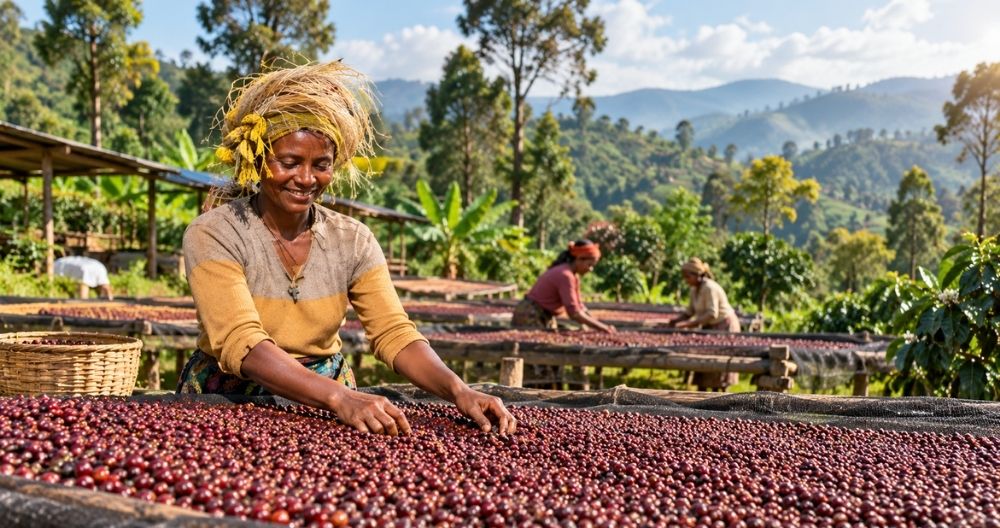
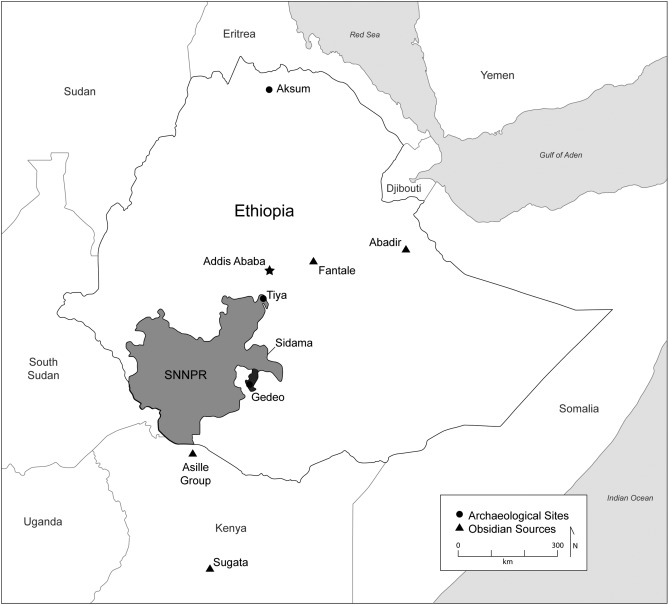
Specifically, Yirgacheffe sits within the Gedeo Zone of Ethiopia’s Southern Nations, Nationalities, and Peoples’ Region. The coffee grows at elevations between roughly 1,700 and 2,200 meters above sea level, on nutrient-rich volcanic soil, under a humid, mist-shrouded microclimate that stays mild year-round.
I mention the geography specifically because it’s not just trivia; it’s the actual engine behind the flavor. Everything else on this list connects back to this terroir in some way.
If you’re ready to actually taste what I’ve been describing, here’s where I’d point you in our specialty range, each one fully traceable back to its washing station.

If you want to actually brew these properly and pull out every floral and citrus note, I’ve written a full step-by-step guide on how to brew Yirgacheffe coffee to highlight its flavors, covering exact ratios, water temperature, and pour technique.
Most coffee drinkers expect chocolate, nuts, or caramel notes. Classic washed Yirgacheffe coffee beans throw that expectation out entirely.
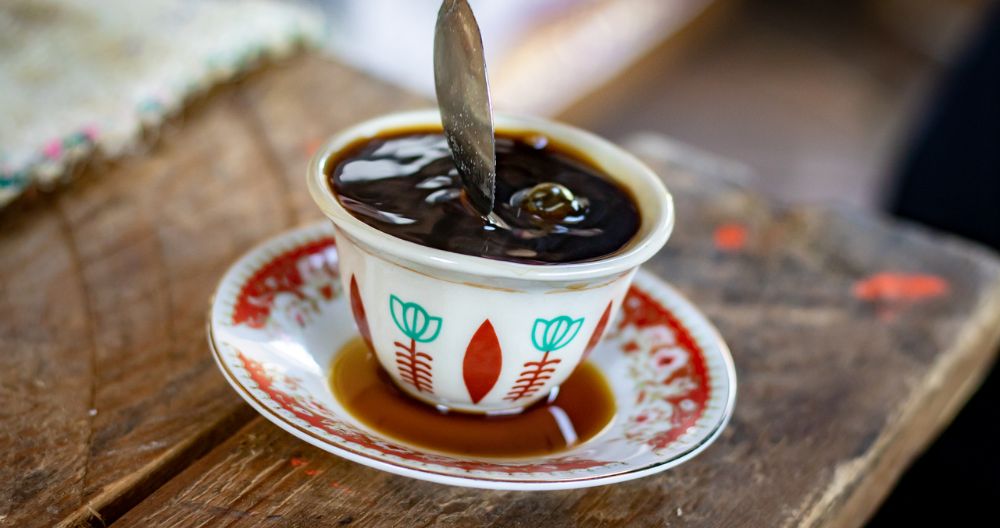
Instead, you get jasmine and honeysuckle florals up front, followed by bright citrus, lemon, bergamot, sometimes tangerine, and a body so light and clean it’s often compared to a high-quality tea rather than a typical cup of coffee. I still remember describing this experience to a friend who genuinely didn’t believe me until she tasted it herself.
This tea-like clarity is the single biggest reason Yirgacheffe has such a devoted following among specialty coffee drinkers. It doesn’t taste like “coffee, but nicer”; it tastes like an entirely different category of drink.
I remember pouring a cup for my father, a lifelong instant-coffee drinker, and watching his face when he smelled it before even taking a sip. He asked me twice if I’d accidentally handed him tea. That reaction is genuinely common, and it’s exactly why I keep this coffee around specifically for skeptics.
Yirgacheffe’s elevation, mostly between 200 and 2,200 meters, creates noticeably cooler nighttime temperatures even in a warm climate. That cooling slows the ripening of the coffee cherries considerably.
Slower ripening matters because it gives the cherry more time to develop sugars and complex aromatic compounds before it’s ever picked. Coffee grown at lower, warmer elevations simply doesn’t get that same extended development window, which is a big part of why high-altitude origins tend to taste more complex across the board, and Yirgacheffe sits near the top of that range.
This is also why altitude is one of the first things I check when someone asks me to help them find the best Ethiopian Yirgacheffe coffee for their setup. A lot listed below, roughly 1,700 meters, is unlikely to deliver the same level of aromatic complexity, even if it’s technically grown within the wider Yirgacheffe zone. It’s a small detail on a label, but it tells you a great deal about what’s actually in the bag.
When people ask me about coffee bean type Yirgacheffe, they’re often expecting a single named varietal, like Bourbon or Typica. That’s not quite how it works here.
Ethiopia is the birthplace of Coffea arabica, and Yirgacheffe specifically is planted with thousands of indigenous heirloom varieties that evolved naturally over centuries, rather than being cloned or selectively bred the way many modern varietals are. Even coffee picked from a single hillside can carry genetic diversity that single-cultivar farms elsewhere in the world simply can’t replicate.
That genetic mix is a huge part of why even neighboring farms in Yirgacheffe can produce noticeably different cups. There’s no single “Yirgacheffe plant”; there’s a whole living library of them.
Here’s a piece of history that surprises a lot of people: Yirgacheffe is historically recognized as the birthplace of wet, or washed, processing mills in Ethiopia, dating back to the 1970s. Before that, most Ethiopian coffee was naturally processed by default.
Washed processing removes the sticky cherry pulp and ferments the beans in clean water tanks before drying, which strips away heavier, earthier, or wild fermented flavors. In practice, this technique acts almost like a magnifying glass, letting the coffee’s natural floral and citrus character come through completely unobstructed, rather than being masked by fruit-skin fermentation.
This is exactly why “washed Yirgacheffe” became the reference standard that so many roasters still measure other clean, bright coffees against.
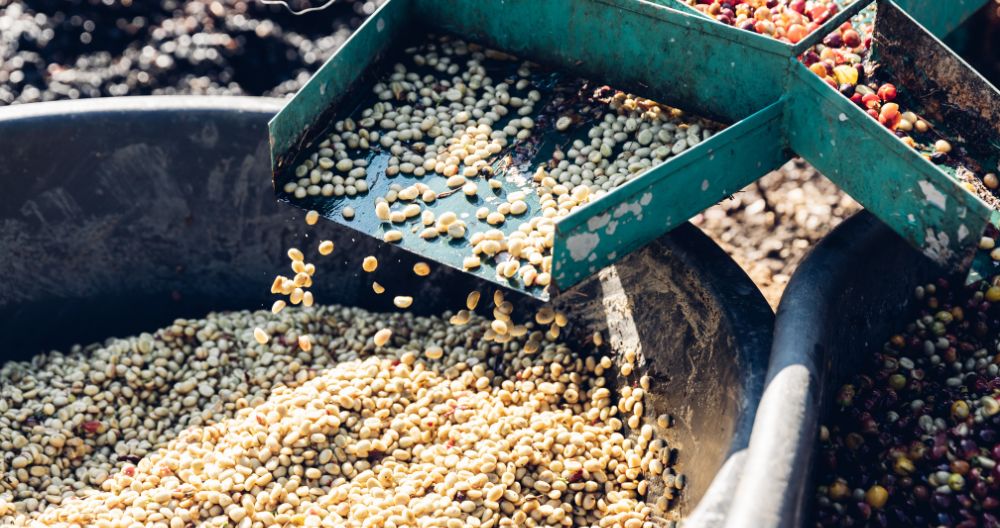
While washed processing built Yirgacheffe’s reputation, naturally processed lots have grown significantly in popularity too, and they tell a genuinely different story in the cup.
Washed Yirgacheffe stays clean, bright, and floral, with jasmine, bergamot, crisp citrus, tea-like body.
Natural Yirgacheffe dials the fruit intensity way up, sweet berries, sometimes peach or tropical notes, a heavier sweetness, and occasionally a wine-like character from the extended contact with the fruit during drying.
Neither is objectively better. They’re genuinely two different experiences from the same origin, and I’d honestly recommend trying both before deciding which one is “your” Yirgacheffe.
This comes up constantly, so let’s settle it clearly. Until the early 2000s, Guji coffee was actually sold under the broader “Sidamo” designation alongside Yirgacheffe. It only gained its own recognized name once buyers started noticing how distinct its flavor really was.
Guji, grown in Ethiopia’s Oromia region at similarly high elevations, tends to produce a fuller, syrupy body with stone fruit sweetness and jasmine florals, and it holds up remarkably well as single-origin espresso, something classic washed Yirgacheffe generally isn’t built for.
Yirgacheffe, by comparison, stays lighter, cleaner, and more tea-like, especially in its washed form. If you want florals with more body and sweetness, Guji is worth exploring. If you want maximum clarity and delicacy, Yirgacheffe remains the benchmark.
Sidamo covers a much larger growing area than Yirgacheffe, which is technically a smaller zone that was historically grouped within it. Because Sidamo spans more land and more microclimates, its lots vary more from farm to farm.
Generally, Sidamo trends toward a fuller, more balanced cup with citrus, chocolate, and sometimes berry or wine-like undertones, a bit heavier and more varied than the precise, floral clarity you get from classic Yirgacheffe. Both are excellent, but Yirgacheffe tends to be the more consistently delicate and refined of the two.
I get this question a lot from people just getting into specialty coffee, and the honest answer is neither is objectively better; they’re built for completely different experiences.
Brazilian coffee, grown mostly at lower altitudes, tends toward nutty, chocolatey, low-acidity, full-bodied cups, which is exactly why it’s such a popular espresso and blending base. Ethiopian coffee, especially something like Yirgacheffe, leans into high acidity, floral aromatics, and a lighter body, which shines in filter and pour-over brewing.
If you want a smooth, comforting, dependable daily cup, Brazil is a fantastic choice. If you want a coffee that genuinely surprises you and tastes nothing like what you expected, that’s exactly where the best Ethiopian Yirgacheffe coffee comes in.
If you’ve seen “Grade 1” or “Grade 2” printed on a bag, here’s what that coffee Yirgacheffe specification actually means. Ethiopian coffee grading runs from 1, the highest, down to 9, the lowest, based on a combination of physical bean defects and cupping score.
Grades 1 and 2 are considered specialty grades, and that’s the standard every genuinely good Yirgacheffe should meet. When you’re evaluating Ethiopian Yirgacheffe coffee beans, always check for this grade, and ideally, for traceability back to a specific washing station or kebele, since that detail tells you far more about what to expect in the cup than the country name alone ever could.
This specification detail is honestly where a lot of casual buyers get misled. A bag can technically say “Yirgacheffe” on the front without listing a grade, a process, or a washing station at all, and still charge a premium price. Learning to check these three details, grade, process, and traceability, is the fastest way to separate the best Ethiopian Yirgacheffe coffee from a bag that’s simply borrowing a famous name.
Not every bag labeled “Yirgacheffe” delivers the same experience, so here’s what I personally check before buying.
If a bag checks all five of these boxes, you’re almost certainly holding something genuinely worth brewing carefully.
I roast and taste coffee professionally, so it takes a lot for one origin to keep surprising me. Yirgacheffe still does, every single season.
Part of it is the sheer variety hiding under one regional name. A washed Aricha lot and a natural Banko Gotiti lot can taste like two completely different coffees, yet both are unmistakably Yirgacheffe once you know what to listen for. That range, within a single origin, is rare.
The other part is simpler. Good Yirgacheffe makes people pay attention to their coffee in a way a lot of daily-drinker blends never do. That’s a genuinely valuable thing for a coffee to do, and it’s why I keep it in permanent rotation.
If you want to keep exploring Ethiopian and specialty coffee more broadly, a few of our other guides pair well with this one: our deeper look at African coffee, our practical guide on where to buy Ethiopian coffee beans, and our breakdown of common coffee flavor notes if you’re still learning to identify what you’re tasting.
A coffee grown in Ethiopia’s Gedeo Zone, known for its floral, citrus, and tea-like character, shaped by high altitude, heirloom genetics, and meticulous processing.
Neither is objectively better; they serve different preferences. Brazil offers smooth, nutty, low-acidity cups great for espresso, while Ethiopia offers bright, floral, high-acidity cups like Yirgacheffe that shine in filter brewing.
Guji tends to have a fuller, syrupy body with stone fruit and jasmine notes and performs well as espresso. Yirgacheffe stays lighter, cleaner, and more tea-like, especially when washed.
Sidamo covers a larger, more varied growing area with a fuller, more balanced profile, while Yirgacheffe, a smaller zone within that broader region, is generally more consistently delicate and floral.
Look for specialty retailers offering traceable, single-origin lots with a clear grade and washing station listed. Mister Coffee’s specialty range includes both washed and natural Yirgacheffe options with full traceability.
The Gedeo Zone in Ethiopia’s Southern Nations, Nationalities, and Peoples’ Region, grown at elevations between roughly 1,700 and 2,200 meters above sea level.
What makes the best Ethiopian Yirgacheffe coffee genuinely unique isn’t any single factor; it’s altitude, heirloom genetics, pioneering washed processing, and generations of smallholder farming knowledge, all converging in one relatively small corner of southern Ethiopia. That combination simply doesn’t exist anywhere else.
If you’ve never tried a proper washed Yirgacheffe, I’d genuinely encourage you to put aside what you expect coffee to taste like first. The moment it tastes more like jasmine tea with a twist of lemon than a “cup of coffee” is usually the moment you understand exactly why this origin has earned its reputation and why I still reach for it after all these years in the industry.


"Where can I actually find good coffee beans at Giant?" I get some version of this question constantly, usually from...
I once watched a new kiosk owner near a KL office tower change her entire menu three times in her...
Walk past any LRT station, office tower, or campus entrance in the Klang Valley these days, and you'll spot at...
My sister has exactly one coffee ritual: rip open a sachet, pour hot water, stir, done. No grinder, no scale,...
A few years back, a first-time café owner sat across from me holding two supplier quotes, both for "premium Arabica...
A few times a month, I get a message from a café owner or a brand founder that goes something...