

I’ve been in the coffee industry for years and if there’s one thing I never get tired of, it’s watching a person’s eyes light up when they say, “I want to open my own café. I hear it all the time at our showroom in Petaling Jaya from fresh graduates, retrenched professionals looking for a new chapter, even retirees who just love coffee too much to sit still.
Here’s the honest truth: a coffee shop business is one of the most rewarding — and most misunderstood — businesses you can start in Malaysia. It looks simple from the outside. Beans, water, a machine, a nice Instagram-worthy corner. But behind every cup is a business plan, a pile of paperwork, and a lot of decisions that can make or break your margins.
This guide is everything I wish someone had told me when I was starting out — practical, honest, and grounded in real numbers.
Table of Contents
Let’s start with why now is actually a good time. Malaysia’s coffee culture is going through a fascinating shift. Analysts project the country’s coffee market to grow at a compound annual growth rate of around 7% between 2025 and 2031, driven by a more urban, more affluent middle class with a taste for premium coffee.
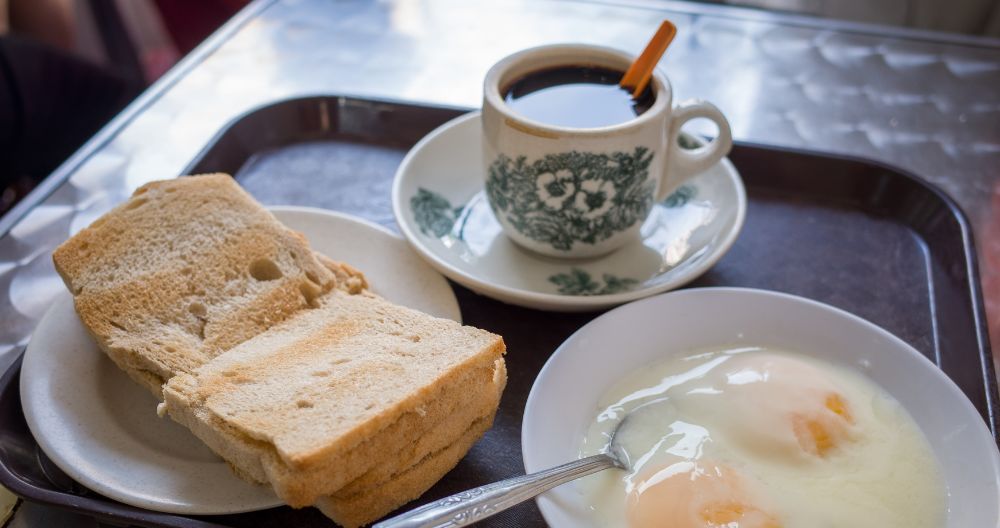
But here’s what makes the coffee business in Malaysia genuinely interesting: it’s not a case of specialty coffee replacing the old ways. Traditional “Kopi O” still holds roughly 40% of the volume share in breakfast consumption nationwide. Meanwhile, specialty cafés are charging RM12 to RM15 for a latte and customers are happily paying it. Old-school kopitiam culture and new-wave café culture are growing side by side, not competing to the death.
There’s also a supply-side story worth knowing. Malaysia’s own coffee bean production covers only about 5% of local industrial demand. That means almost every serious coffee business here depends on sourcing quality green beans from overseas, which is exactly why choosing the right coffee bean supplier matters so much (more on that later).
If you’re picturing a bigger, sit-down concept, know that café culture itself is expanding too, with more outlets opening across the country and formats like drive-throughs gaining ground fast. There’s room in this market for a small neighborhood coffee corner and a 50-seat lifestyle café alike.
Before you sign a single tenancy agreement, sit down and write a business plan for your small coffee shop. I know “business plan” sounds like homework, but think of it as your safety net—it forces you to answer the hard questions before the landlord does.
A solid coffee business plan should cover:
I once worked with a couple from Selangor who came to us with a beautiful mood board but no numbers at all. We sat down together and reverse-engineered it: at an average selling price of RM8 per cup, they needed roughly 120 cups a day just to cover rent, wages, and ingredients. That single exercise reshaped their entire floor plan — they cut seating and added a takeaway counter instead. That’s the power of doing your coffee business plan properly before you spend a cent.
This is where dreams meet reality. Industry estimates put the total investment for opening a café in Malaysia anywhere between RM100,000 and RM500,000, depending on size, concept, and location. That’s a wide range, so let’s break it down.
For a smaller, budget-conscious coffee business start up — think a kiosk or a compact 15-20 seat café — you’re typically looking at:
For a full-concept café with proper seating, a designed interior, and a broader menu, renovation alone can run RM150,000-RM200,000, with total capital easily crossing RM300,000. I’ve seen shoplot conversions in the Klang Valley land anywhere between RM250,000 and RM375,000 once everything — reno, equipment, deposit, and working capital — is tallied up.

Don’t forget ongoing costs either. Rent, salaries, utilities, and loan repayments for an average café can add up to RM25,000-RM50,000 a month. Many new owners budget beautifully for the opening day and then get caught off guard in month three when the float runs dry. Keep at least three months of operating cash in reserve — this is the single piece of advice I repeat most often.
Every legal coffee shop business in Malaysia has to be registered with Suruhanjaya Syarikat Malaysia (SSM), the Companies Commission of Malaysia. You have two main routes:
Sole Proprietorship or Partnership — the simplest and cheapest way to start a small business coffee shop. Registration costs RM30 a year if you use your personal name, or RM60 a year for a trade name, plus RM5 per branch. Approval usually comes through within one to two working days via the ezBiz portal. The trade-off is unlimited personal liability — if the business runs into debt, your personal assets are on the line.
Private Limited Company (Sdn Bhd) — a separate legal entity that protects your personal assets. Incorporation costs around RM1,010 (including a name search fee), plus an annual return filing. You’ll also need a licensed company secretary, which typically costs RM600-RM2,000 a year. Processing can take up to two weeks.
My general advice: if you’re testing the waters with one small outlet and modest revenue, a sole proprietorship keeps things simple and cheap. Once you’re scaling to multiple branches, bringing in partners, or signing larger supply contracts, it’s worth converting to a Sdn Bhd for the liability protection.
This is the part most first-time owners underestimate. Malaysia’s food and beverage sector is genuinely well-regulated, and skipping a step can get your café shut down before it’s even open. Here’s what you’ll typically need:
Business Premise & Signboard License — issued by your local council (PBT), such as DBKL, MBPJ, or MBSA depending on where you’re located. This confirms your unit is zoned for commercial food use and covers any outdoor signage. These two are usually applied for together and processed within two to four weeks if your paperwork is complete.
Food Handler Certificate — mandatory under the Food Hygiene Regulations 2009 for anyone touching food or drink prep. The course costs around RM50 per person and, since 2024, the certificate is valid for life. Every staff member behind your counter needs one, not just the owner.
Typhoid Vaccination — required alongside the food handler certificate, and it needs renewing every three years.
Food Premises Registration — done through the Ministry of Health’s FOSIM portal, and it’s free.
Halal Certification (optional but powerful) — issued by JAKIM, taking three to six months and costing roughly RM1,000-RM5,000. It’s not compulsory, but with over 8,500 Halal-certified restaurants already operating in Malaysia, it’s become close to a market expectation if you’re aiming for a broad customer base.
Learn more: Coffee Bean Halal Certified in Malaysia
BOMBA Fire Certificate — required if your premises involve commercial cooking equipment or gas lines.
WRT License — only relevant if you’re a foreign national opening a café here. This wholesale, retail, and trade license typically requires a much higher paid-up capital threshold, so plan financing well in advance if this applies to you.

I always tell new owners: budget both time and money for licensing. Rushing to open before your premise license clears is one of the fastest ways to get an unpleasant visit from the local council.
Location decides more of your success than your coffee ever will, which stings to admit as a coffee person, but it’s true. Foot traffic near universities, coworking spaces, residential zones, and transit hubs consistently outperforms beautiful-but-hidden units.
Before signing any tenancy agreement, walk the area at different times of day. A spot that looks buzzing at lunch might be dead by 6pm — and if you’re planning a coffee-and-breakfast concept, that matters enormously. Also check the tenancy terms for exclusivity clauses, renovation allowances, and whether the mall or building has restrictions on signage or hours.
Here’s where I get to talk about what I know best. Your coffee bean business relationship — meaning who supplies your beans — is arguably the single decision that shapes your product quality for years to come.
Since domestic bean production only meets a fraction of local demand, almost every café here sources beans that have travelled through a roaster and importer first. At Mister Coffee, we source green beans from over 25 countries, and our roasting process has been refined since 1982 to bring out consistent flavor whether you need traditional Kopi ‘O’, drip coffee, coffee bags, or specialty beans for espresso-based drinks. We’re also Halal-certified through the Halal Professional Board and JAKIM, and hold ISO, MeSTI, HACCP and FSSC 22000 credentials — which matters a great deal if you’re planning to apply for your own Halal certification down the line.
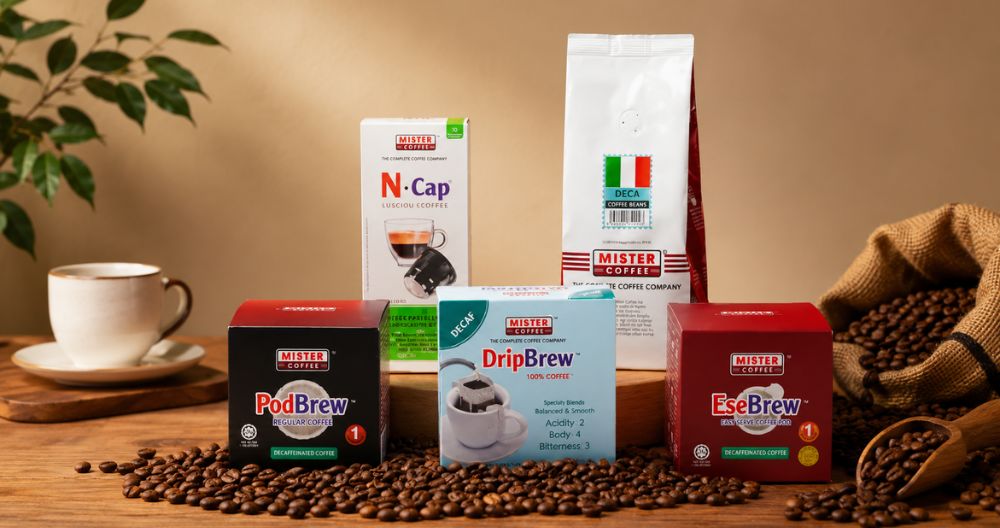
A quick word of encouragement here: don’t feel pressured to buy the most expensive single-origin beans on day one. Many successful small business coffee shop owners I’ve met started with a reliable, consistent house blend and only introduced rotating specialty beans once they understood their customers’ palates.
Equipment is the other half of this equation. Choosing the right coffee machine for business use depends entirely on your volume and concept:
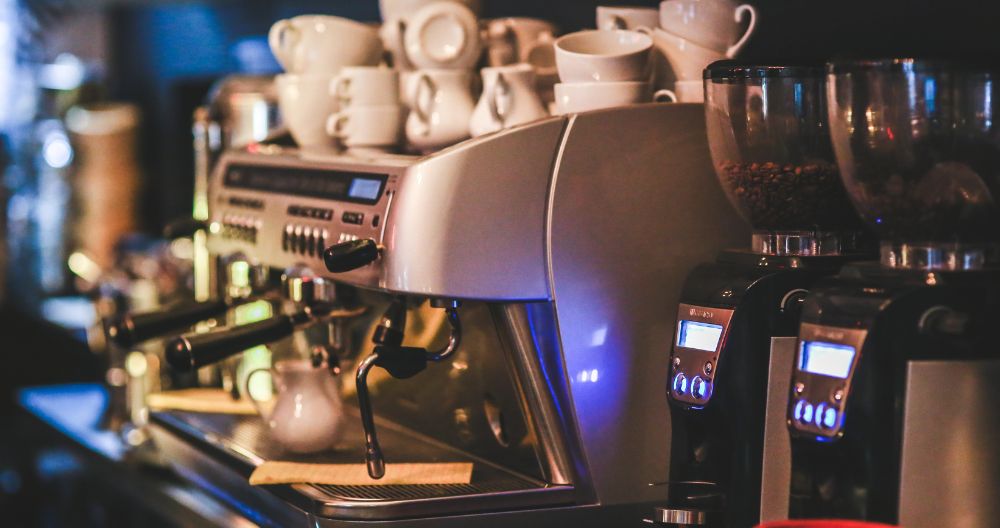
We supply all three categories, alongside the beans and consumables, precisely because most café owners need one supplier who understands both sides of the counter.
Your coffee might be excellent, but if your staff seem checked out, customers notice immediately. Every food handler needs that RM50 certificate before they touch a single cup, but proper training goes well beyond compliance.
Invest time in teaching consistency — the same recipe, the same pour, the same greeting, every single time. I’ve watched cafés with average coffee thrive because the staff made every customer feel like a regular, and I’ve watched cafés with genuinely excellent beans struggle because service felt cold. People come back for how they felt, not just what they drank.
Don’t wait for your grand opening to start building an audience. Document your renovation journey on social media, share your concept story, and get your neighbours curious weeks in advance. A modest marketing budget of RM2,000-RM10,000 for your opening period — social posts, simple print materials, maybe a soft-launch promotion — goes a long way in a market where word of mouth travels fast through group chats and reviews.
After years of conversations with café owners, a few patterns repeat themselves constantly:
If you’ve read this far, you’re already doing something most people skip — genuinely learning how to start a coffee business instead of just dreaming about it. That alone puts you ahead.
Malaysia’s coffee business landscape has room for the nostalgic kopitiam, the modern specialty café, and everything in between. What separates the ones that last from the ones that fold within a year usually isn’t the coffee itself — it’s the planning, the paperwork, and the willingness to treat this as a real business from day one.
If you’re at the stage of comparing coffee bean suppliers or trying to figure out which coffee machine fits your concept and budget, that’s exactly the conversation our team at Mister Coffee has every day. We’ve been doing this since 1982, and whether you need beans, machines, or just someone to talk through your numbers with, our showrooms in Petaling Jaya and Tasek Central (Johor Bahru) are open Monday to Friday, and you can reach us anytime via WhatsApp at +6012-662-2907 or email at onlinestore@mistercoffee.com.my.
Budget cafés can start around RM100,000–RM150,000. Full-concept cafés with proper renovation typically run RM250,000–RM500,000, covering renovation, equipment, licenses, and a few months of working capital.
Yes, it’s mandatory. A sole proprietorship costs RM30–RM60/year and takes 1–2 days to approve. A Sdn Bhd costs around RM1,010 to incorporate plus a company secretary fee.
Sole proprietorship if you’re starting small and testing the concept—it’s cheap and fast. Sdn Bhd if you want liability protection, plan multiple outlets, or expect larger supplier/franchise contracts.
At minimum: SSM business registration, a premise & signboard license from your local council, a Food Handler Certificate for every staff member (RM50, valid for life), and Food Premises Registration with the Ministry of Health via FOSIM.
No, it’s optional—but with 8,500+ Halal-certified restaurants already operating nationwide, it’s close to a market expectation if you want a broad customer base. It costs roughly RM1,000–RM5,000 and takes 3–6 months.
Yes, but foreign-owned cafés need a WRT (Wholesale, Retail & Trade) license, which comes with a much higher paid-up capital requirement — plan financing early.
Premise and signboard approval usually takes 2–4 weeks if your documents are complete. Halal certification, if you go for it, adds another 3–6 months on top.
Underbudgeting for the first 2–3 months of operations. Most people plan well for opening day but forget ongoing costs of RM25,000–RM50,000/month for rent, wages, and utilities.


I still remember the first time I made a latte at home that actually tasted like something from a café,...
Which coffee brewing method is best? The honest answer is, it depends on you and your lifestyle. Coffee brewing isn’t...
If you are a coffee lover, you probably have seen drip bags around. But did you know that the single-serve...
Latte art is a beautiful thing. You can be an art critic and still drink your coffee at the same...
Steaming milk may seem easy. However, it takes skill to achieve the creamy microfoam milk that is suitable to create...
If you’ve ever wondered how to make a good cup of espresso at home, you’re not alone. It might look...